The doors open to the airport arrivals area and the heat of Guatemala, and it draws me outside. I’ve arrived to start a 17 day, guided group trip through Central America, and our first meeting point is not Guatemala City, where I have flown into, but Antigua, a preserved colonial city, postcard-worthy, if they still sold them. So I wait here for the shuttle I reserved. The humidity hangs low and heavy, as if it’s waiting for the next political revolution, but no storm of any kind is brewing. The last one, ostensibly to stave off a growing communist party and protect the United Fruit Company’s profits, was finally finished by 1996 after decades of civil war. In the country’s relatively recent modern memory, President Clinton formally apologized in 1999 to the Guatemalan government for the US’ role in the genocide of the indigenous Mayan population. Twenty five short years later, society is open and peaceful in this currently democratic, center-left country. Along the airport arrivals platform, Guatemalan women excitedly kackle in multi-generational matriarchal groups waiting for an arrival. They’re wearing their traditional dress: embroidered patterns of animals and patterns in brilliant red, blue, yellow and green that I’ll soon see on bags, scarves, table cloths, birds, and most anything. Men donning cowboy hats and Wrangler jeans held up by exaggerated belt buckles pace up and down the waiting areas. Floating above the crowded platform, clutched in quivering fists are the flowers, balloons, stuffed animals, and welcome banners. Taxis, shuttle busses, and Ubers pull up, take off; their drivers and guides lifting signs while canvassing the area for arranged pick-ups. Nest to me, an exuberant young American girl waits for her Guatemalan boyfriend, who lives here, who will be pulling up shortly, to whisk her off into the jungles of love.
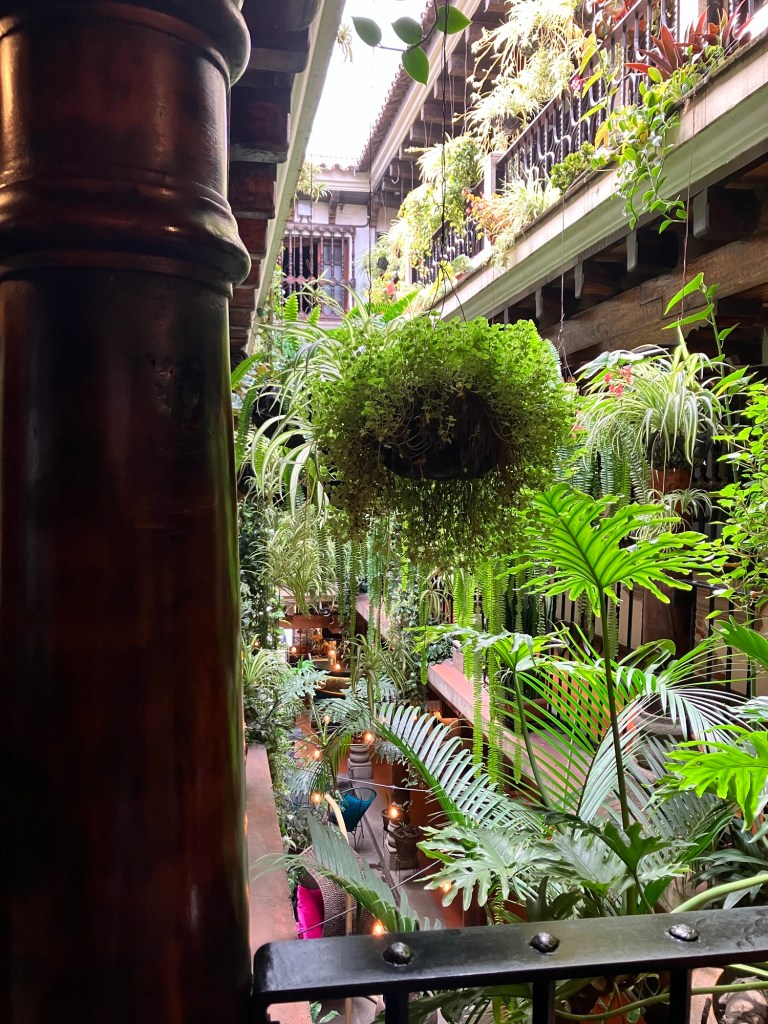
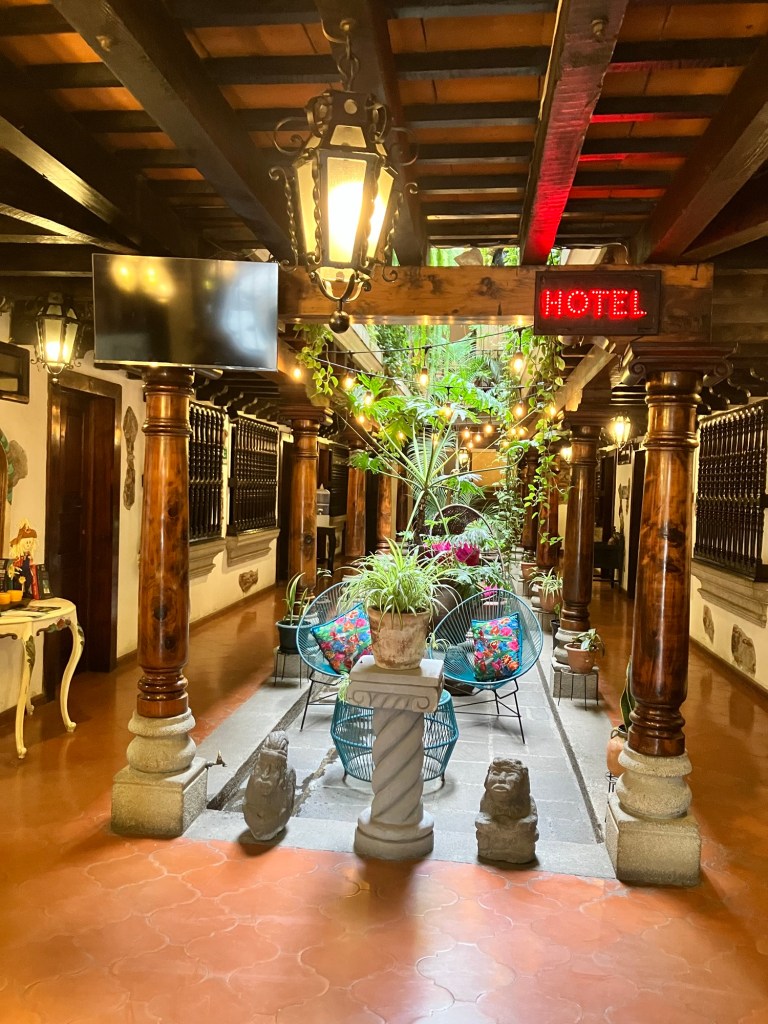
From the airport, the shuttle takes me to Antigua, our starting point and where I’ll meet up with 16 other travelers. The city shouldn’t be that far. But the increased traffic on roads that feel the neglect of infrastructure maintenance makes the 36 km trip a two and a half hour drive. Eventually though, through a tangle of traffic, beneath fireworks splashing and shooting off into the air that I will later learn that Guatemalans let off for any occasion but mainly “just because,” the van makes it into Antigua, announcing itself by the roads made of rough, uncut stone that the van bumps and juts its way over. The hotel rooms are situated around an open air, center garden lush with green and a bar in the back. I find my room and settle in.
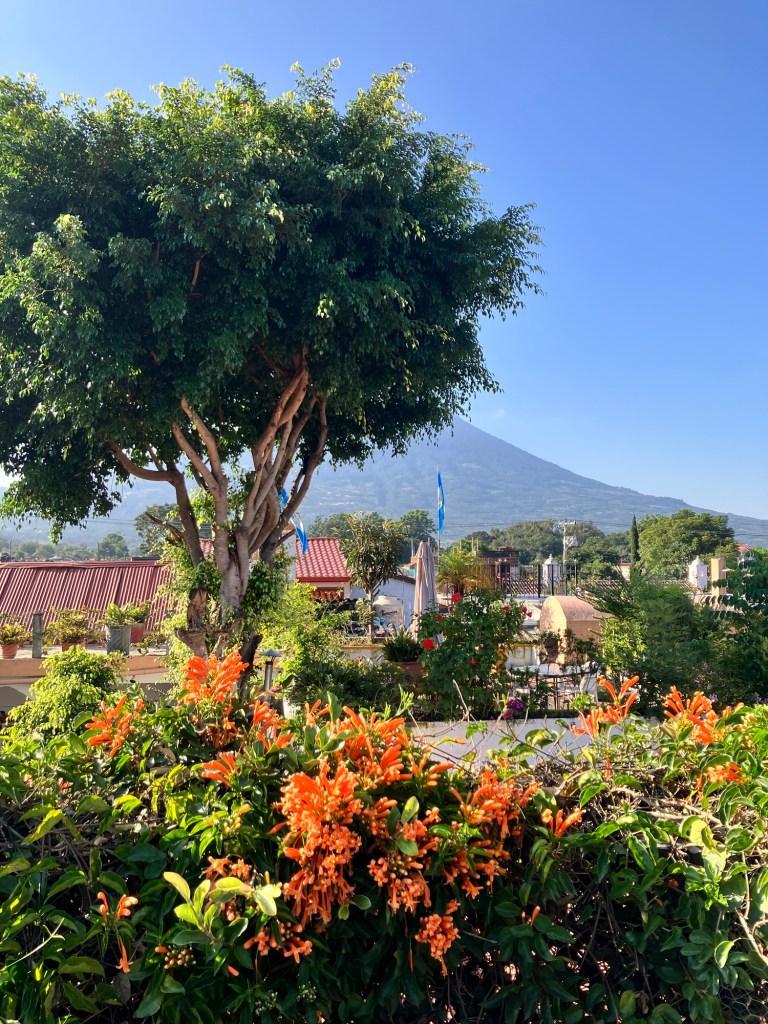
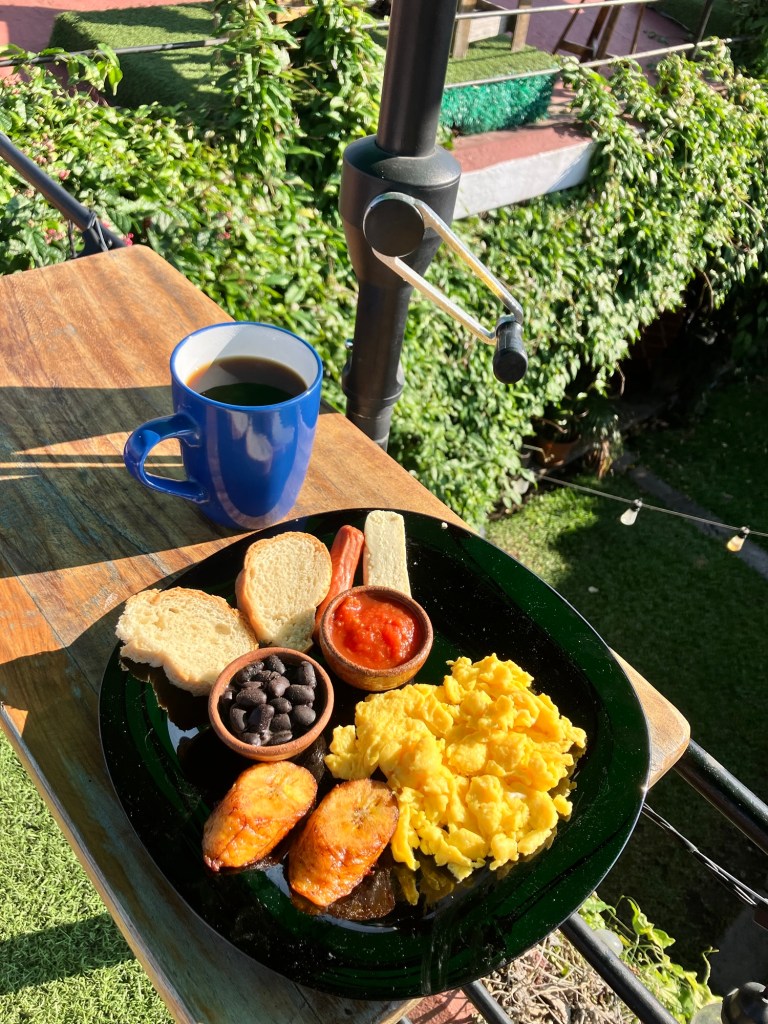
I’m directed upstairs the next morning to the rooftop for coffee and breakfast. The sun shines yellow. The sky burns blue. Tropical birds welcome me from the papaya trees. A salsa song plays from a radio somewhere and floats above the orange Spanish-tiled roofs. Beyond them, the surrounding volcanos peak in what seems like perfect triangles whose summits come into and out of view by wisps of wayward clouds. I’m served coffee and a Guatemalan breakfast of eggs, beans, and plantains.
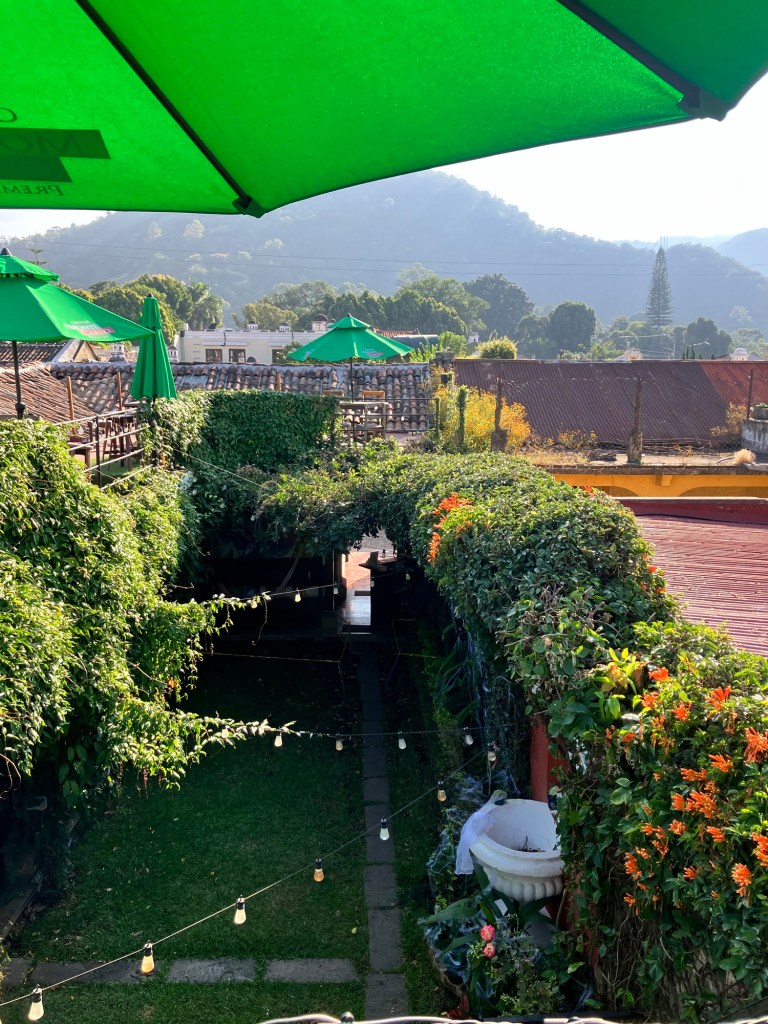
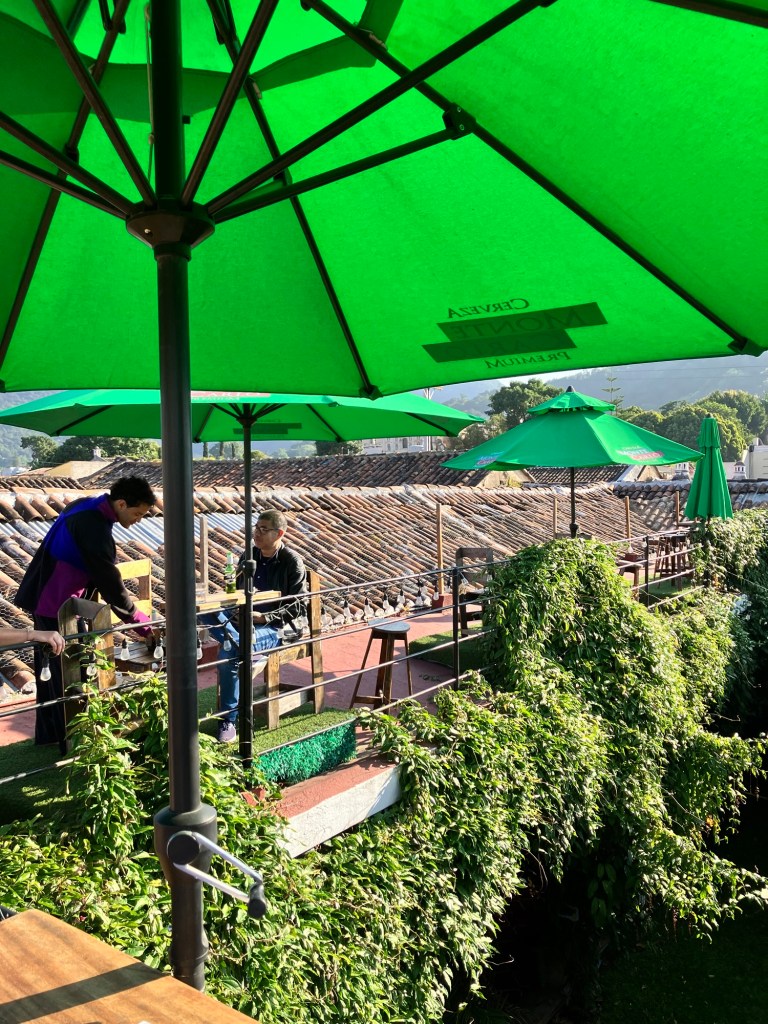
Before long I’m joined by the hotel receptionist and his friend, and within minutes he tells me in his not so frequently practiced English his entire family lineage and history. Juan Jose as he calls himself, differentiated by the receptionist’s Juan Abdiel – “We all in Guatemala have two names” he tells me – is on vacation. He has no reason to “travel” or go anywhere else. He comes here to this hotel, to visit his friend and have a breakfast of beer and fruit with music and conversation. In that moment I couldn’t argue with him. He points to one of the volcanos. “You see the smoke?” I do. I notice a small gray trail leaving the cone. “At night you can see the red lava.” Later on, on the rooftop of the hotel where the group will meet, I will see the small red spill, and see pictures from those who arrived a few days earlier in order to climb it. But for now, I rise and thank them for suggesting a day’s itinerary for me.
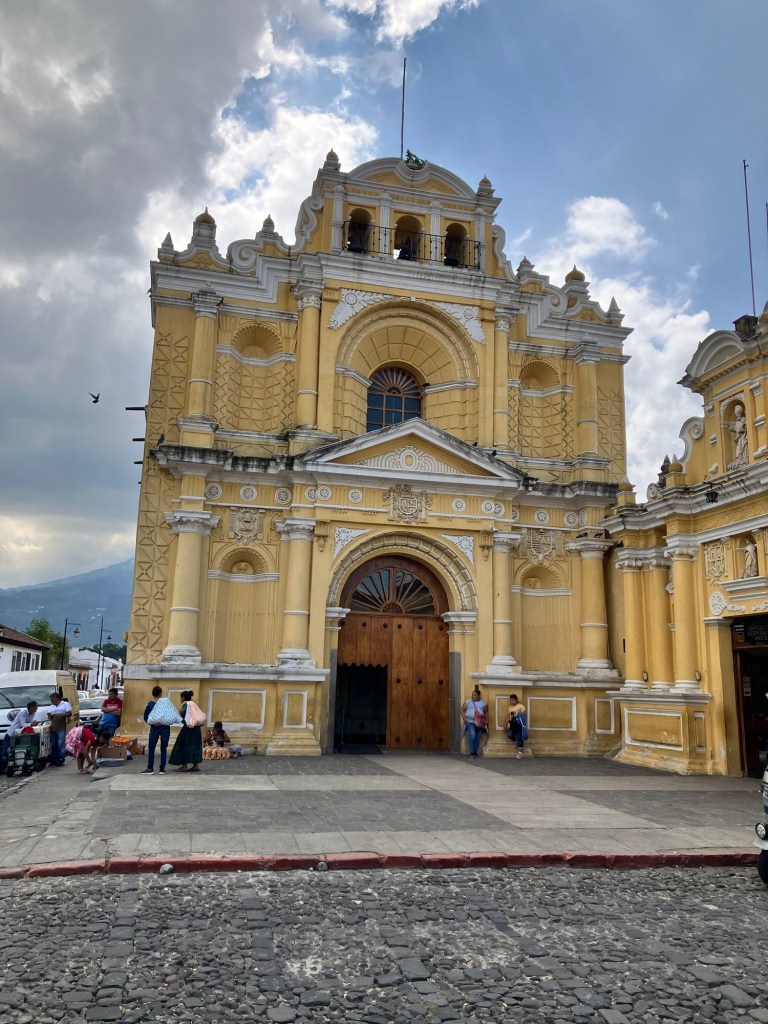
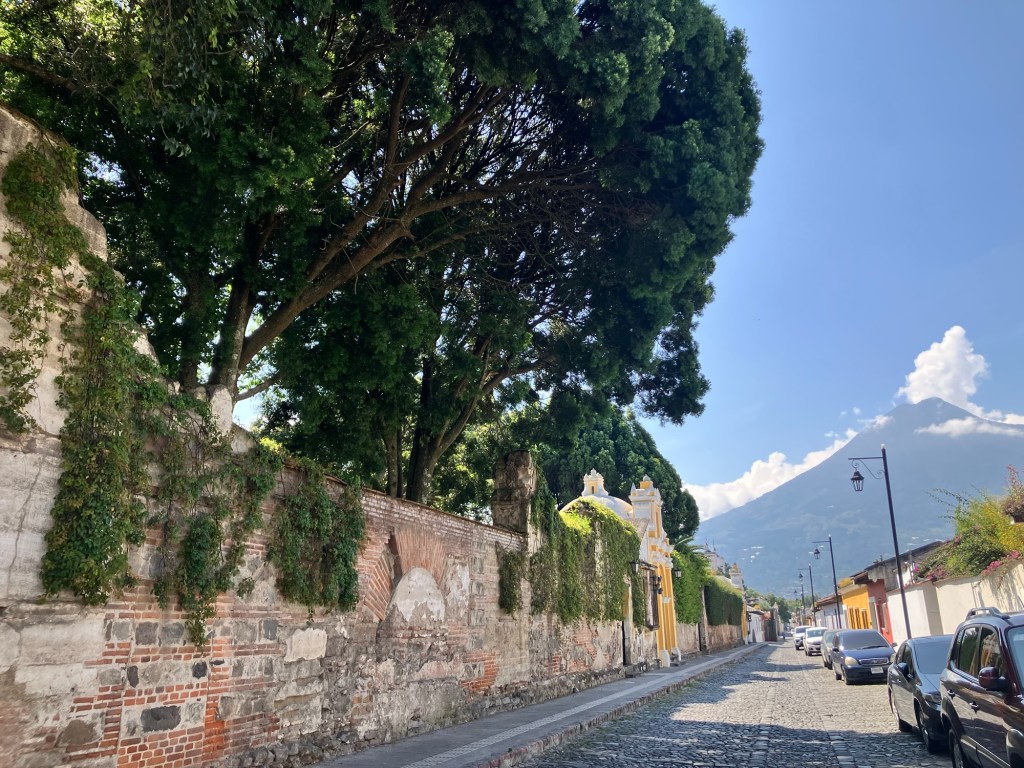
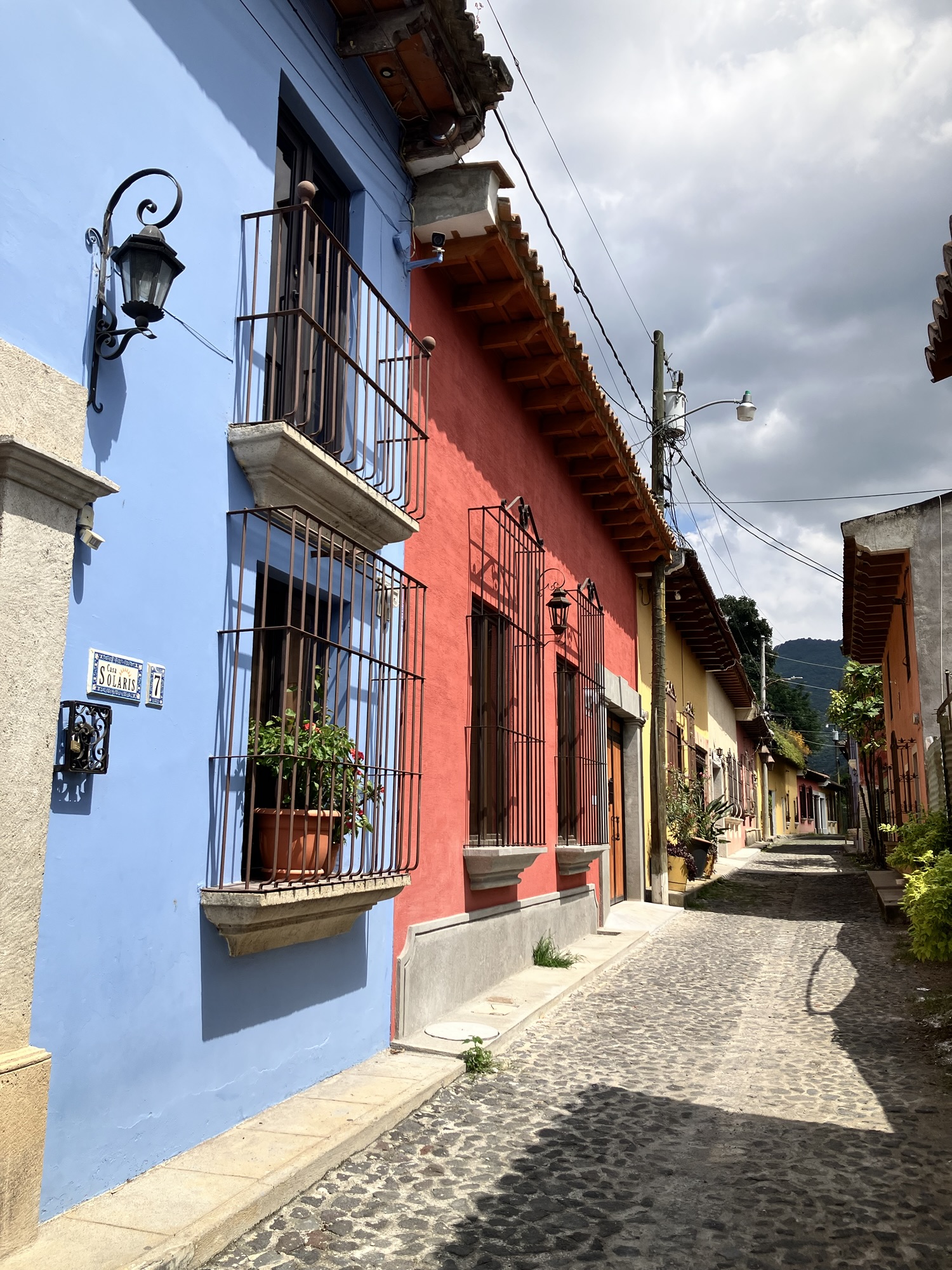
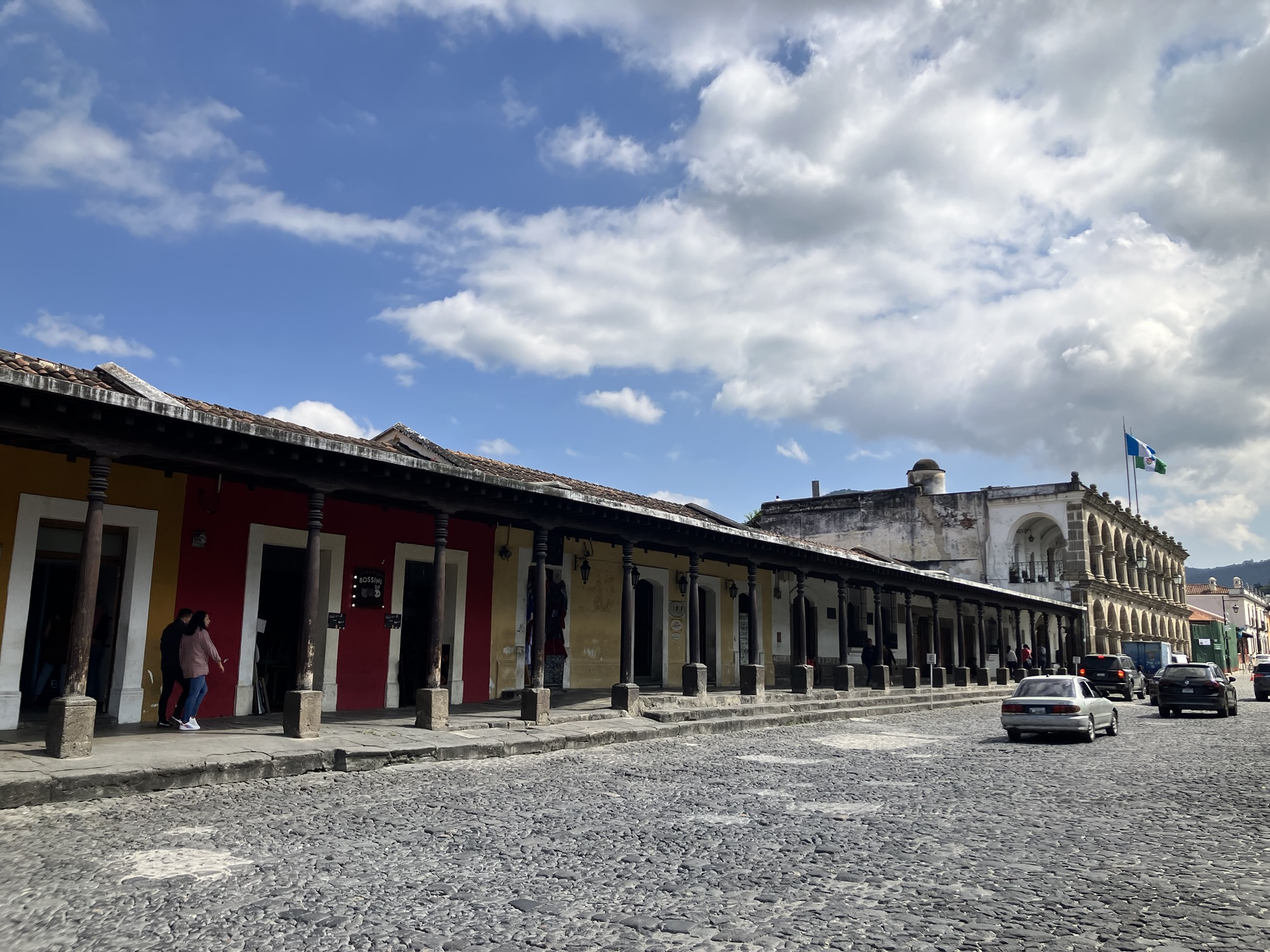
Antigua Guatemala is a UNESCO heritage city. It’s now in its third location where a protected status ensures its position. Founded in 1521 by the Spanish colonists, burnt down by the angry indigenous three years later, rebuilt and then buried by subsequent earthquakes in the 1570s, moved and rebuilt to its current spot, most survivors left for and moved the government seat to Guatemala City. Antigua was left untouched and sparsely populated. As a result, it has kept its colonial architecture and imported Italian renaissance style city layout of a square grid form, all city blocks in equilateral size. The stucco exteriors of the buildings, none higher than one story, maintain their original aesthetic, the interiors now used for hotels, domiciles, restaurants or shops. The roads (repairs on some of them were underway on this day) are laid with the original type of stone and style, a style that is unpredictably hazardous on the ankles. But no one here is walking along in high heels, and the preservation in the heritage of Antigua, one of the oldest cities in Central America that shares its approximate date with Granada, Nicaragua, keeps its integrity.
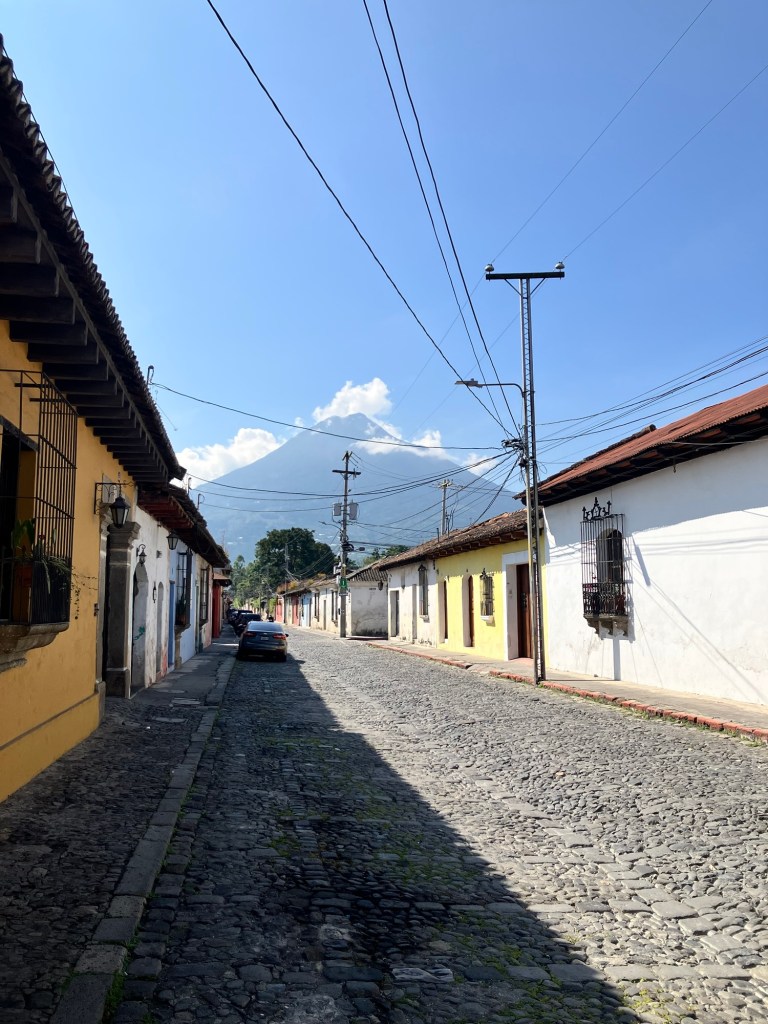
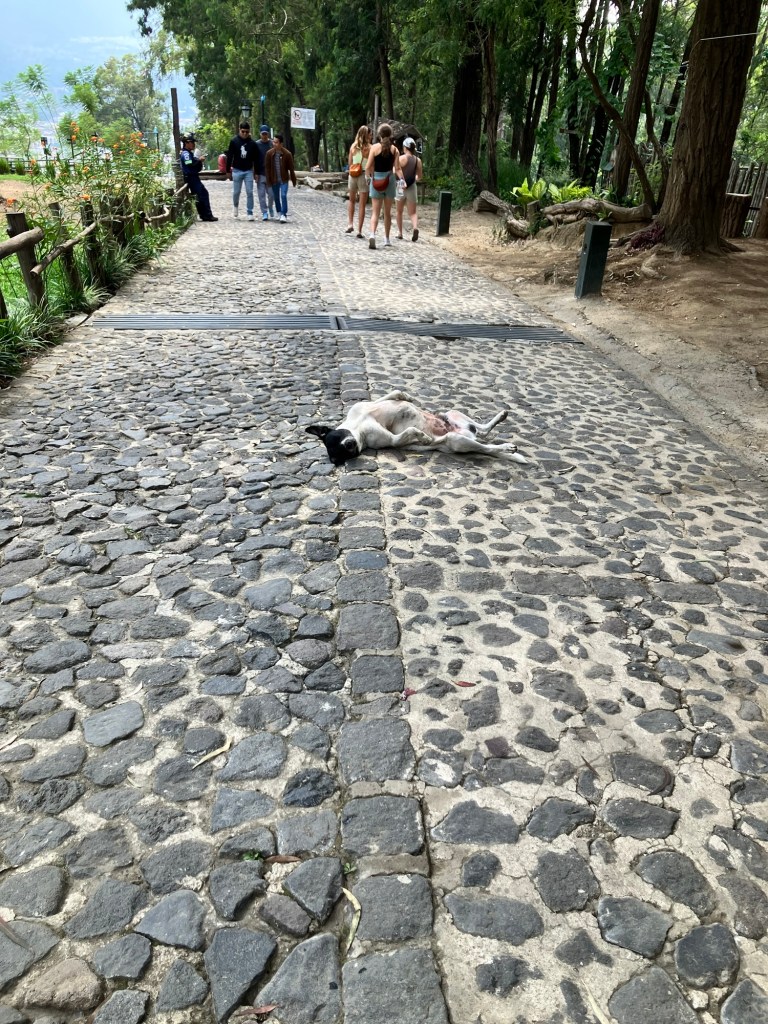
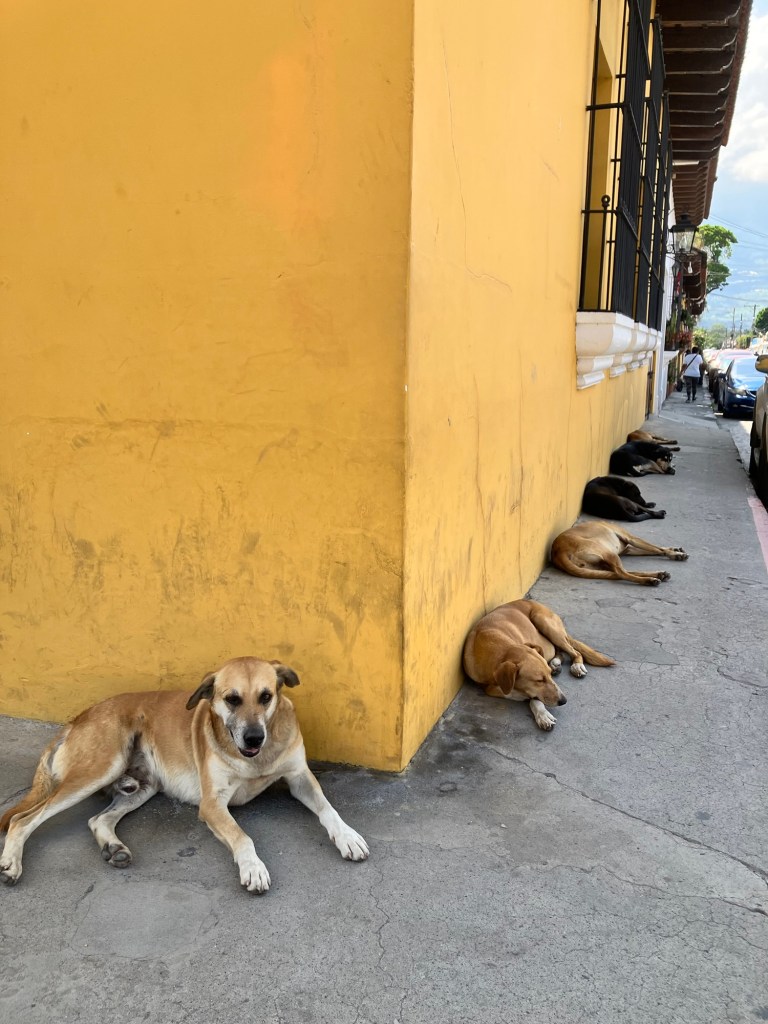
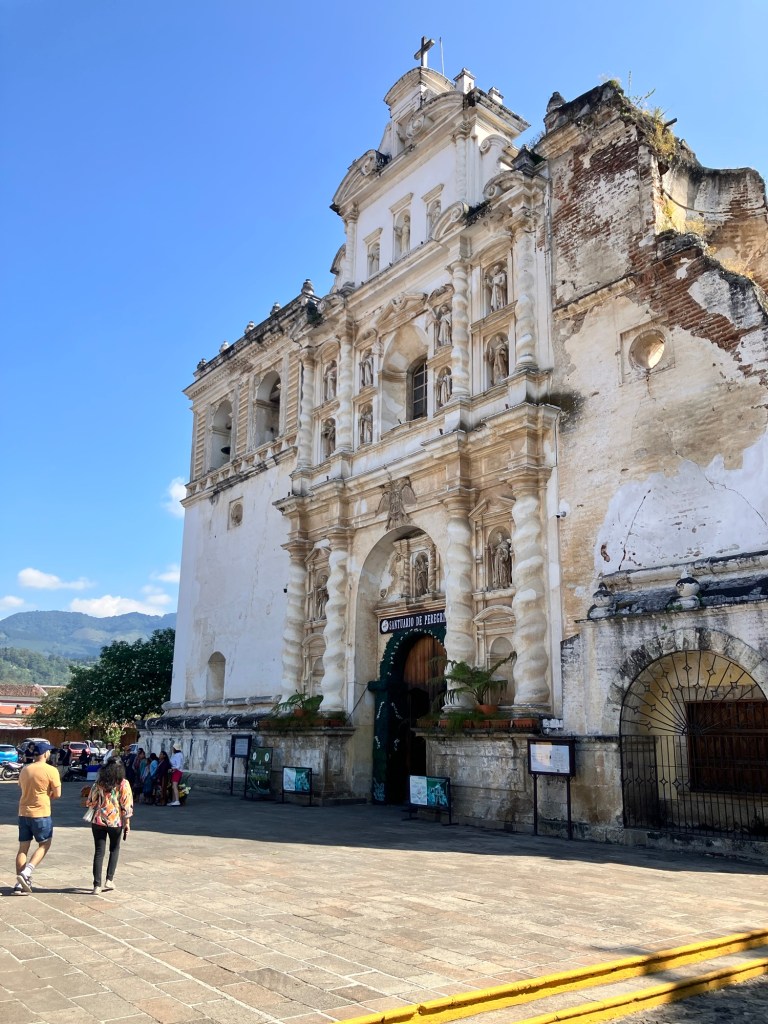
I walk along the uneven narrow sidewalks, higher than the road by a good foot if not more, which may be indicative of heavy rainfall. Without any greenery in the form of trees or grass along the way or even space or thought of a parkway, little can absorb the heat and glare descending on the city. Although unique to my eyes in its style, the absence of diversity in form and color both natural and man made leaves streets too similar for recognition until I’ve oriented myself to the Calle, streets running east and west, and the Avenida, avenues stretching north and south. To seek relief, I head into a church enclosed by a small garden and ruins. The dark and cool interior entices me to stay a while, and I find myself witnessing three supplicants inching their way up to the alter on their knees, murmuring prayers all the way.
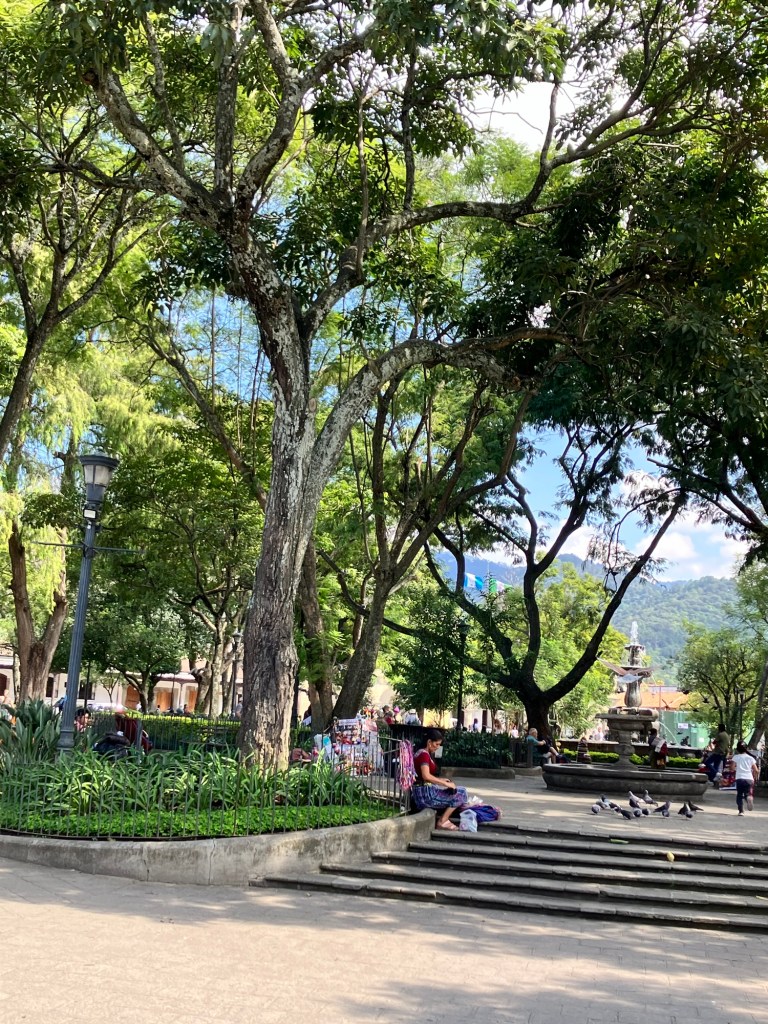
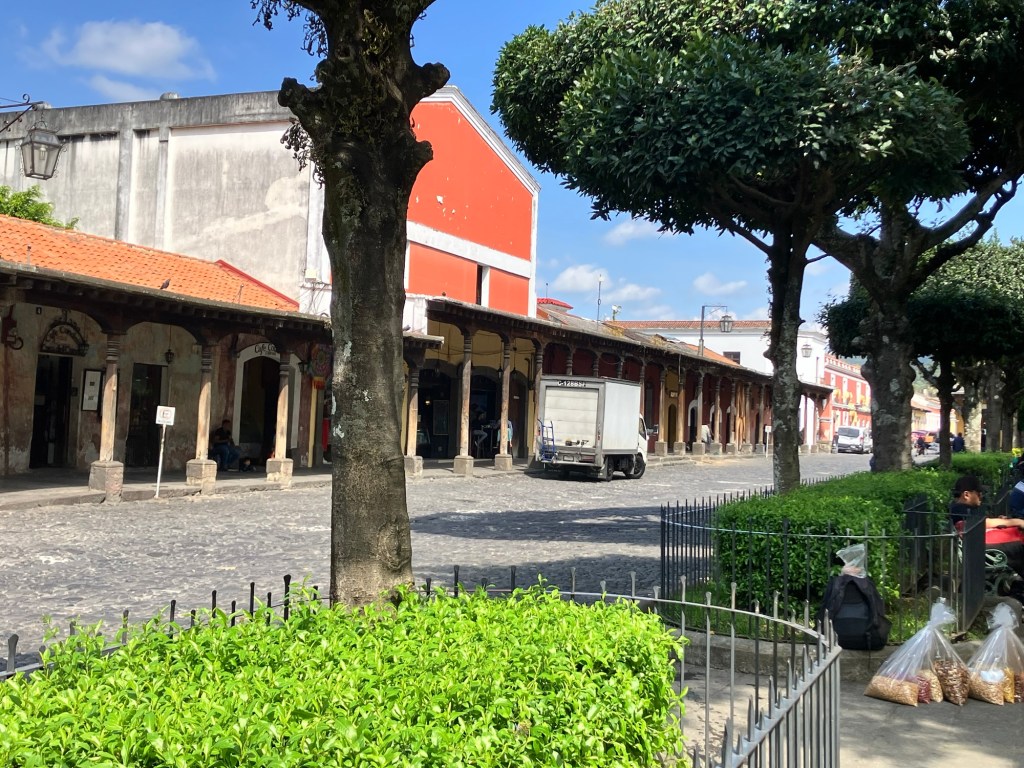
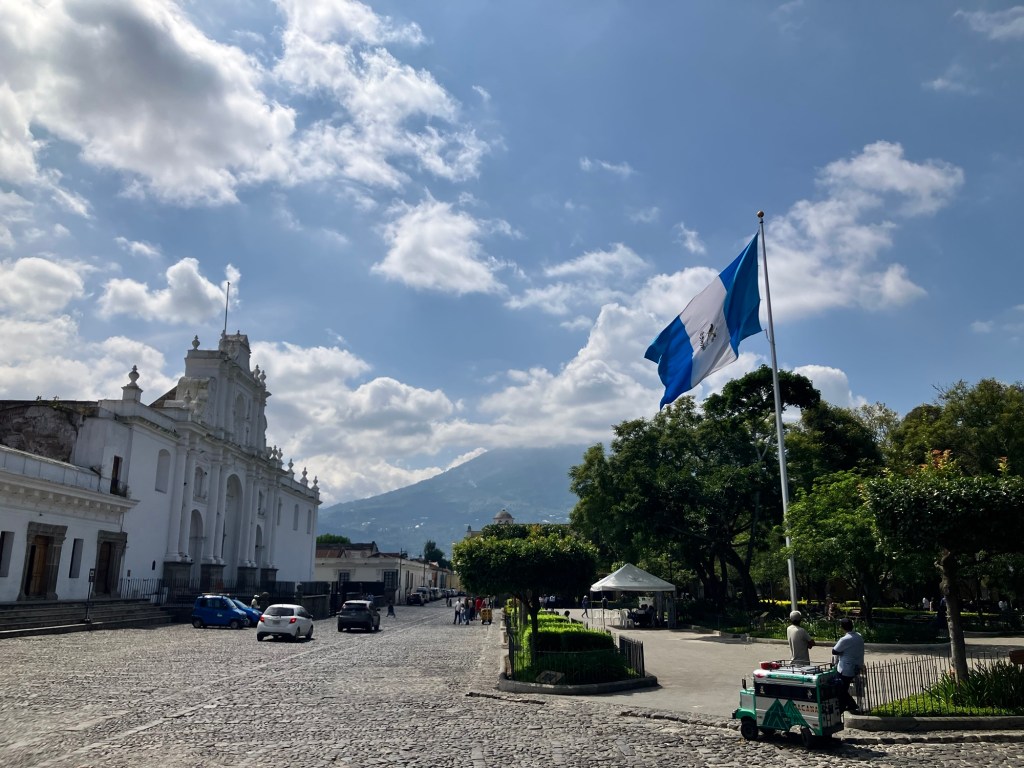
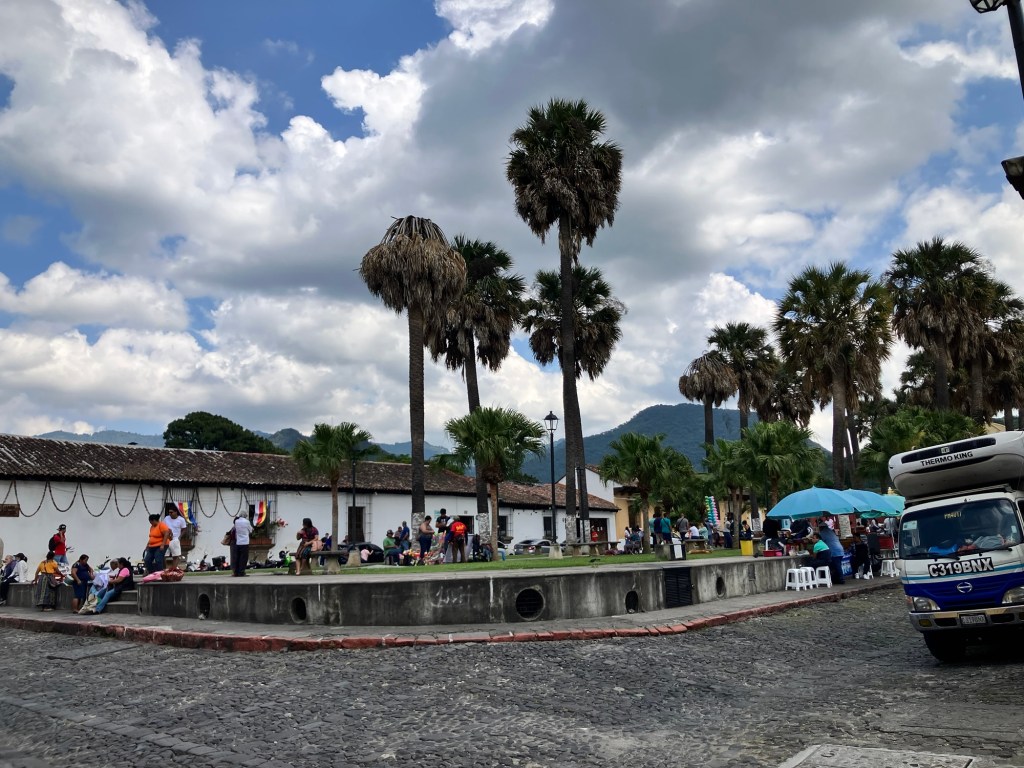
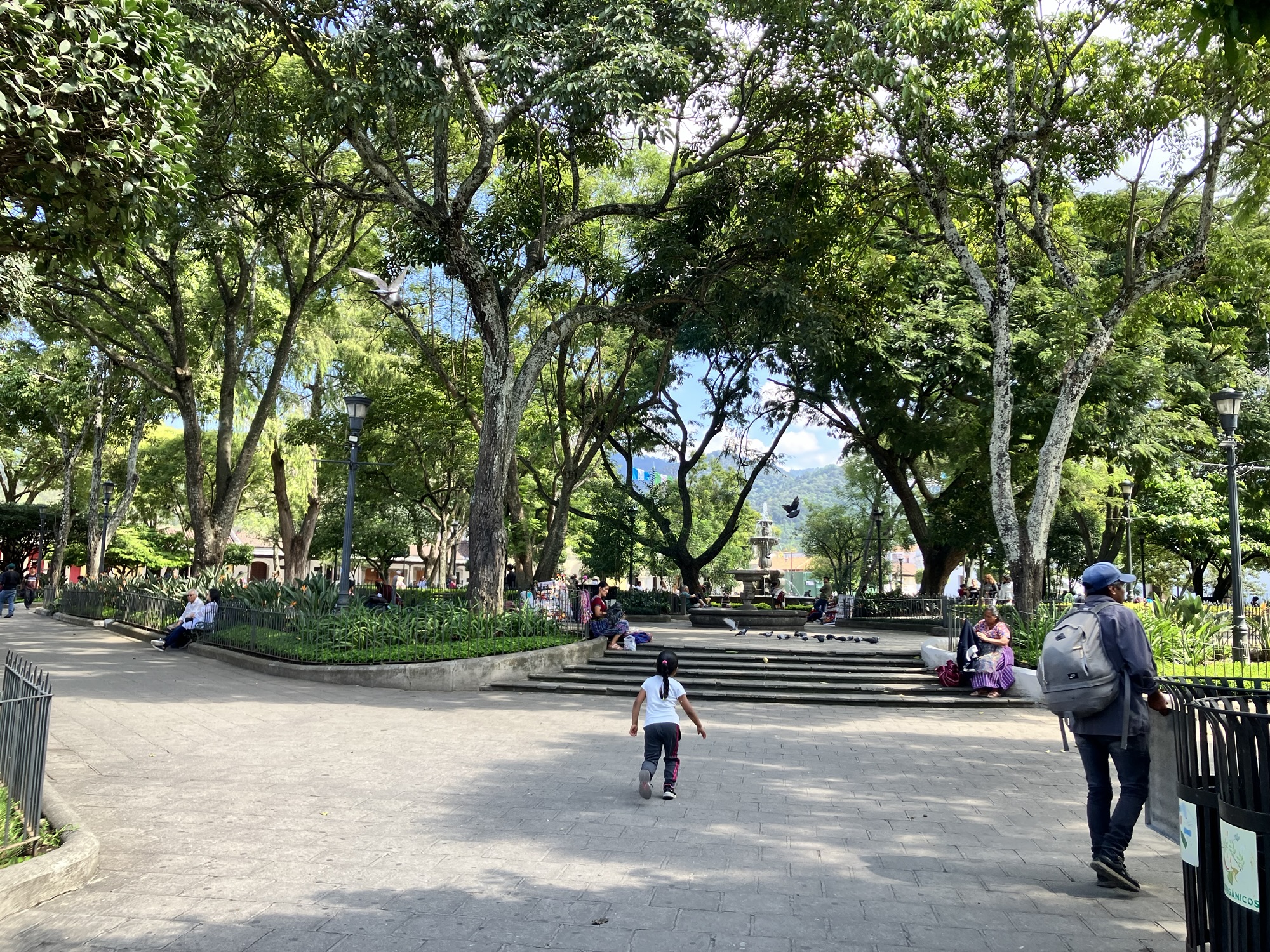
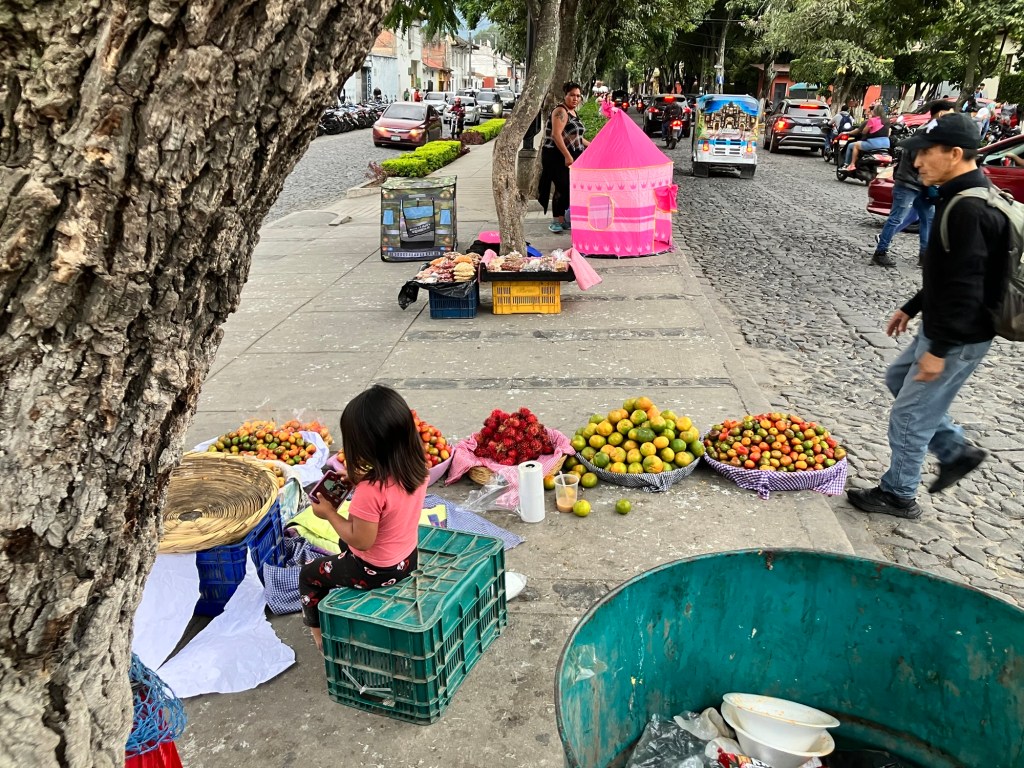
Referring to the map I printed out beforehand, I arrive at the block that comprises the main city park. In its center, a fountain and the welcome addition of trees and greenery offer shade and places for locals to sell their hand made jewelry and woven fabrics, bags of sweets and dried plantain pieces. The hope and the desperation in their faces becomes acutely apparent. The dependence on tourism terribly important. On my first day, I overpay for a scarf. I don’t know if I really want it. But the price I paid will give her family food for several weeks.
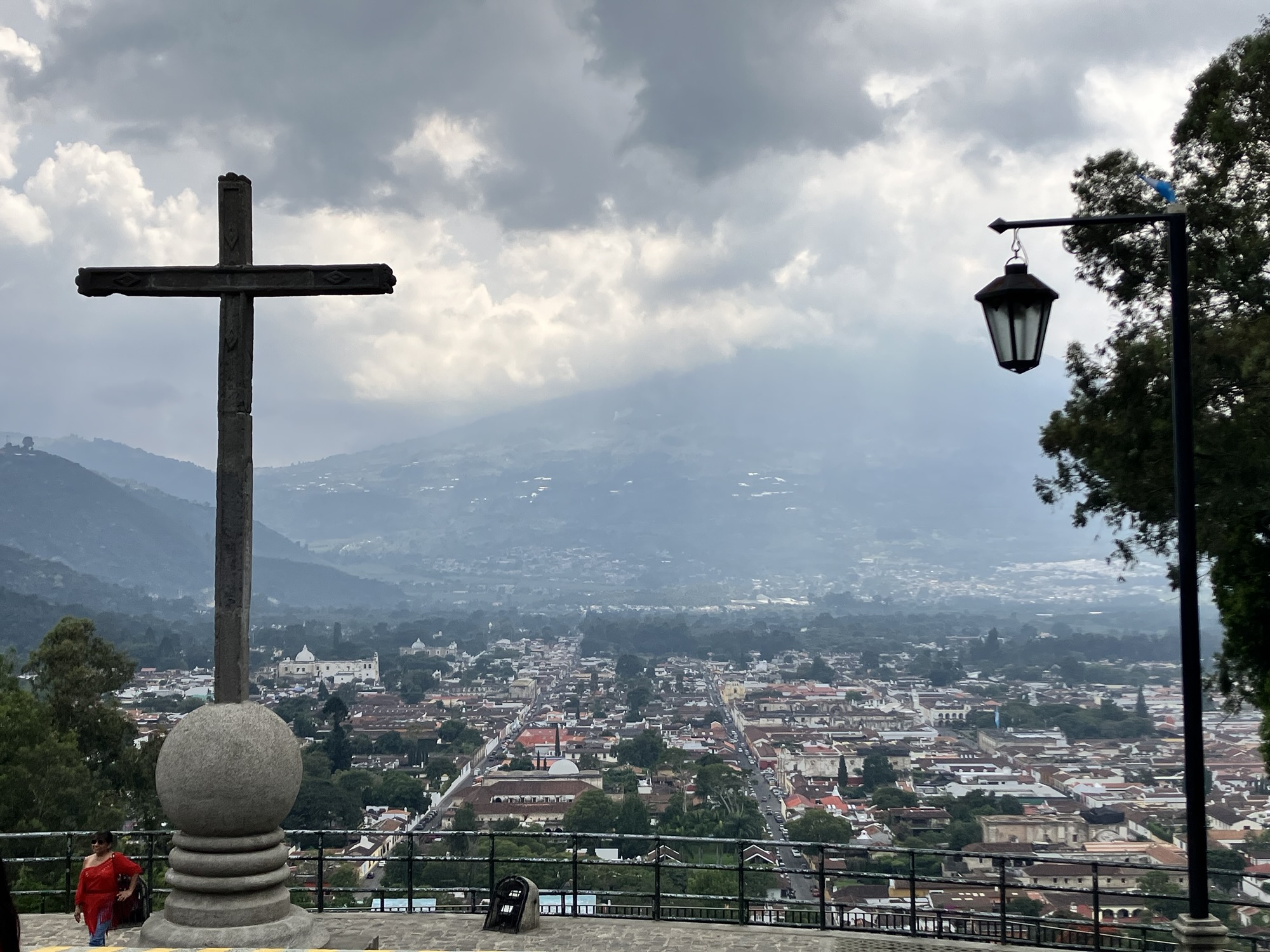
Clearing the city grid and walking east, I hike up a surrounding hill, where local firefighters ask for a donation from hikers so as to get up to the view that looks over the city. Once up there, I indeed sit and look. Unfortunately a gray haze floats above the concrete valley that I attribute to the heavy unleaded and diesel exhaust I couldn’t help but notice billowing out from service trucks. Its insidious pall is held captive by the natural volcano barriers that surround Antigua.
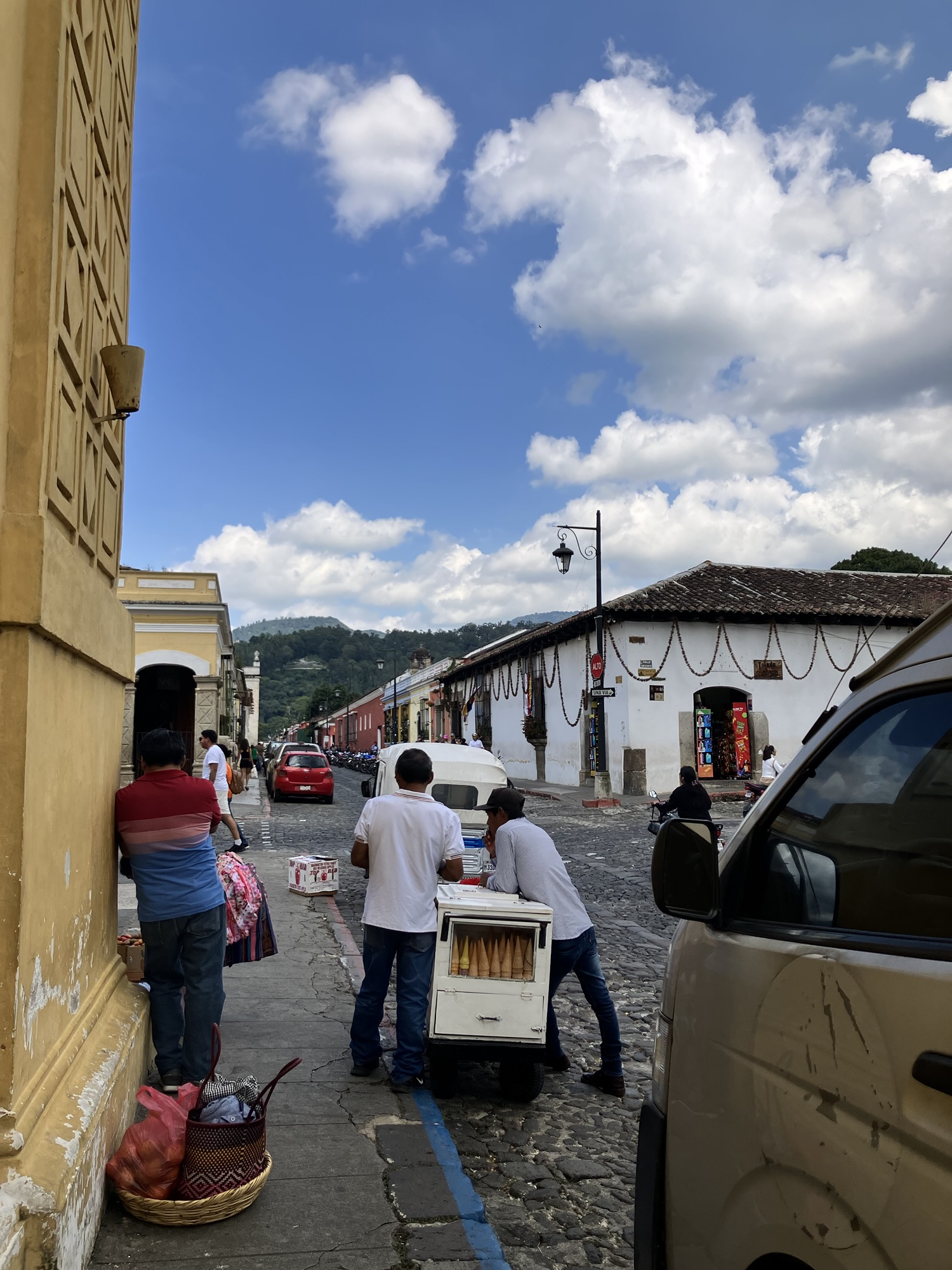
The vendors and peddlers – Ola seniorita, como estas? – sing out their goods: Coca Cola! Jugo de papaya exprimid!, Batidos frios! Sandia! Limonade! Choco-late! They share a life which starkly reveals the disparity and serendipity of birthplace and parents and future paths. Such contrasts surround me: serene nature next to compromised air and drinking water; pious pilgrims next to beggars and shoeless children, right around the corner from homes barred in iron and storefronts shielded by metal rolling security shutters. But it is no different than anywhere else. We become immune to those disparities in our own countries. Travel sheds us of our complacencies and awakens in us something vitally important and overlooked: a shared earth, a common human bond. I wrap my newly bought shawl around my shoulders and tramp back down into the city in search for that very essence.
Michelle greets me from behind the bar in an Antiguan brewery. Her smile is infectious, her twenty-something youthful spirit spells out for me the general demeanor of Guatemalans I’ve already come to suspect in my one-day walk around. And indeed this engaging characteristic flowers the faces of nearly all the people I meet. For all their historic troubles, they have a knack for surviving well. I’ve perceived the contrasts from my lens and not theirs. It’s perhaps an absence of things and choices that make life a little lighter, a little more present.
She pours me a local beer and a shot of the local Guatemalan drink Quetzalteca, made from sugar cane and spices. I ask her questions and she seems enthusiastic in wanting to practice her English in answering them. I listen to her animated phrasal descriptions of her home life and university goals. We learn English and Spanish words from each other. She serves me a dish of avocado and cheese filled empanadas. I would come back here, I would give her gifts, I would want to read her university course schedule.
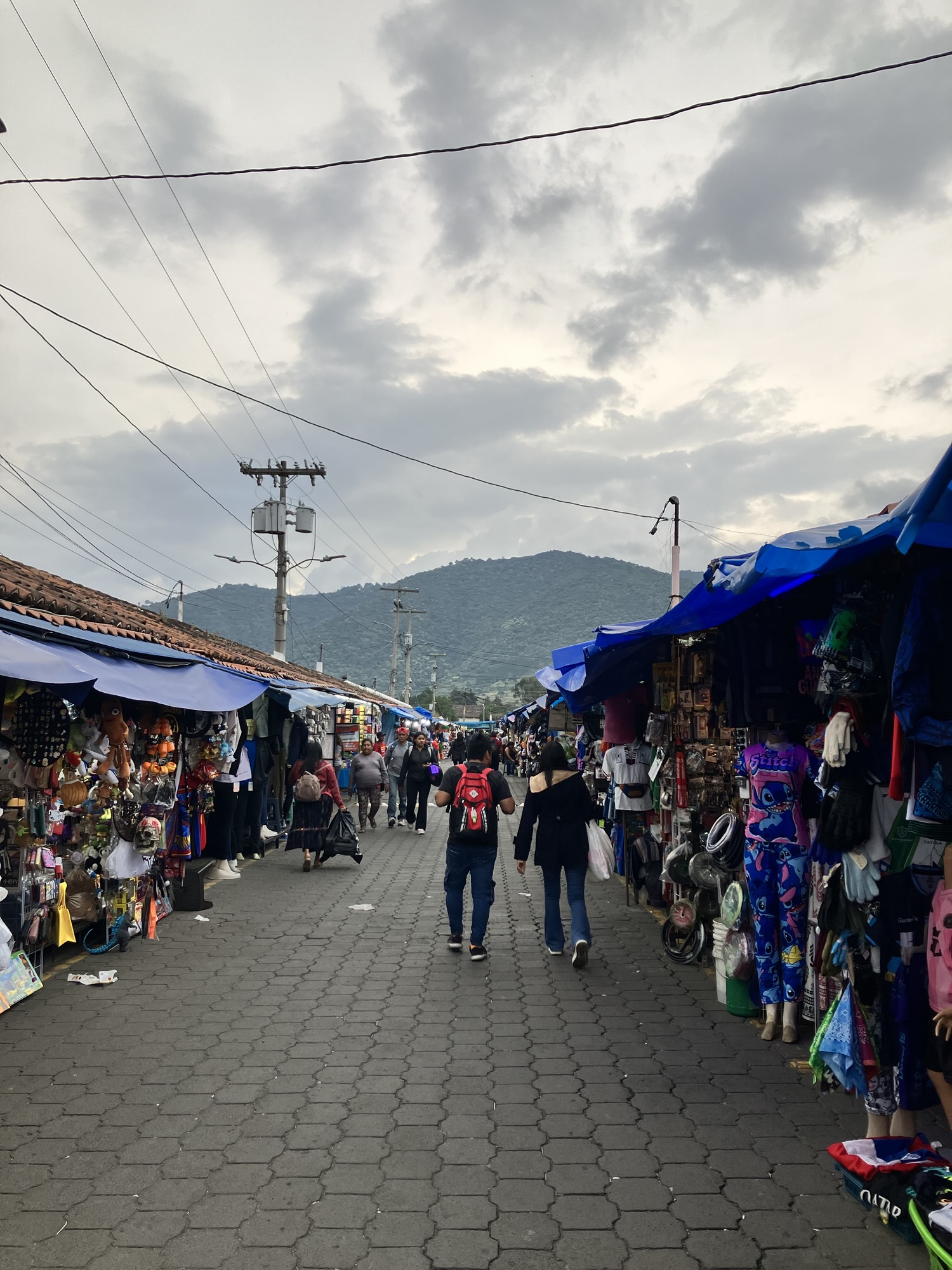
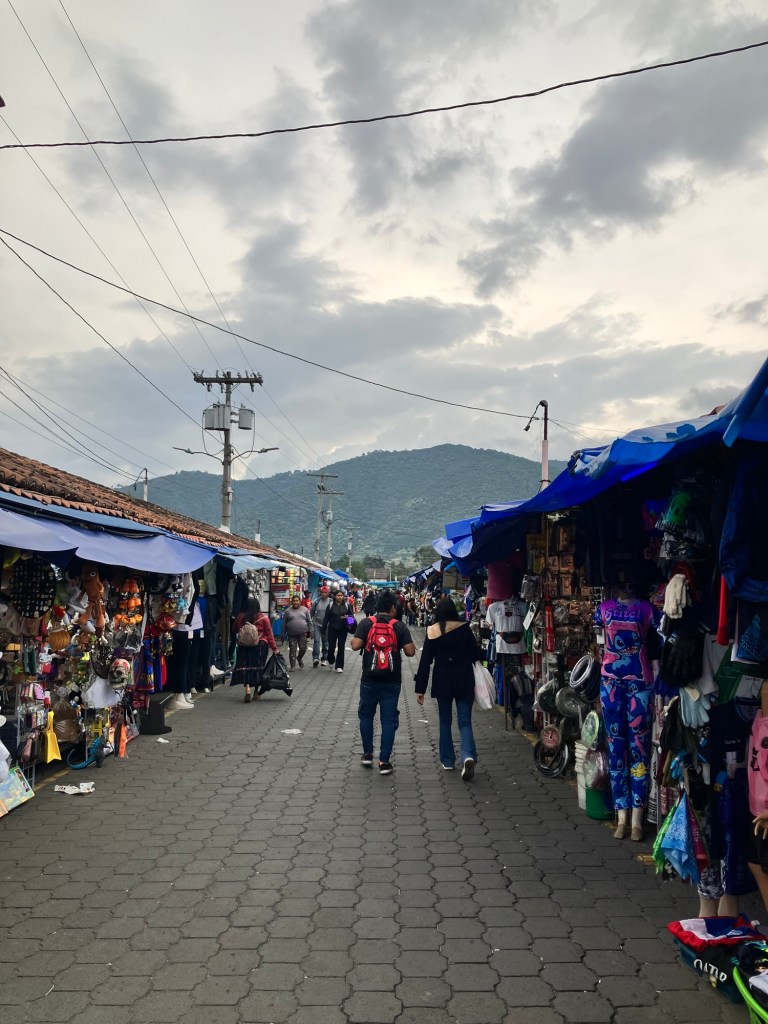
For the remaining few hours I walk through the bustling central market where stalls vie for space and sales. Household goods, souvenirs, toys, clothing, fresh fish and meat, produce and grain – if you don’t see what you want, you hear it by the vendors calling and singing in crescendo over one another. It’s enough for this first day, my impressions saturated. I return to the hotel, find my assigned room and roommate and meet the rest of the group up on the roof for orientation. We are all in high spirits and interested in learning about how we found our way here and ready to go. The tour officially opens and we begin the first of our nightly dinners at The Rainbow Bar and Restaurant a few blocks down and around a corner.

The next morning, into the van we go, all 16 plus tour guide and driver, staking out the seats we hope will become ours for the duration of the trip. There are the up front and view seaters, the ones prone to motion sickness, the ones who share the snacks, the ones who film the passing countryside, the ones who snooze the whole way there. By the end of the day’s seven- hour ride to Copan Ruinas, Honduras, small details about us emerge. Through the conversations of some and the silence from others, from small comments or statements, from shared common concerns like bathroom breaks, ETAs and lunch, we begin to feel the bonds of a team form which will, after a few days, show predilections for certain cliques to form. There are the backpackers and the suitcase haulers, the drinkers and the non, the thirty-year-olds and the older olds, the thrill seekers and the personal journeyers. Despite all of our baggage – that which we took and that which we left – we have each other’s backs.
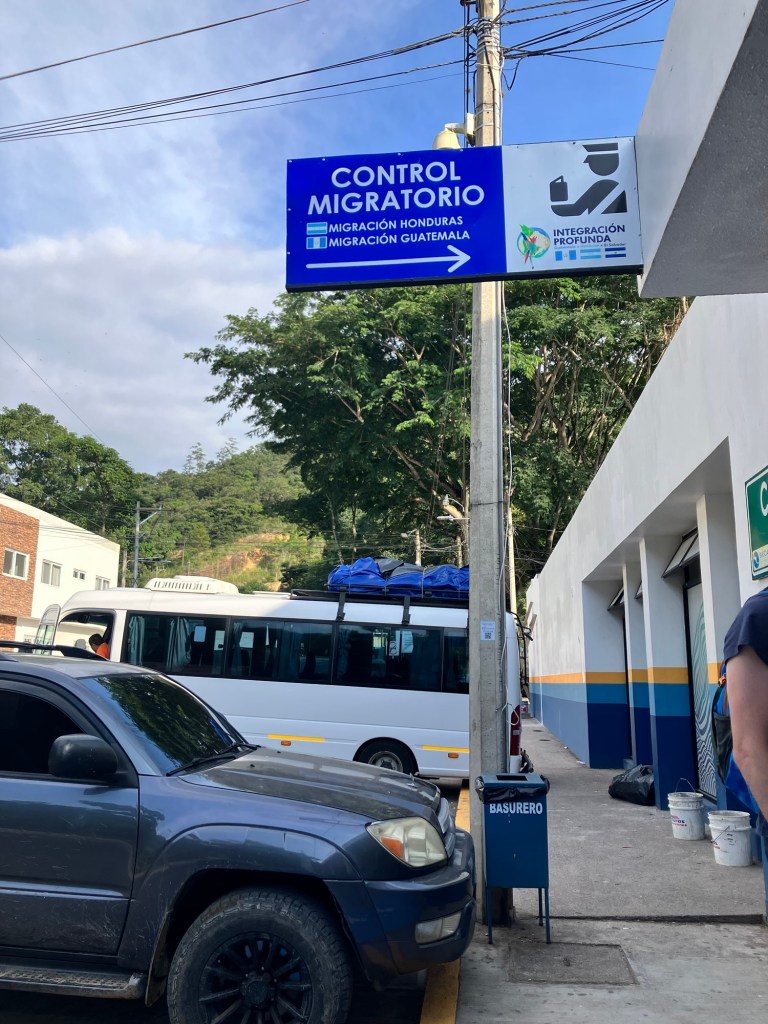
We leave Guatemala. Dense tropical forests cloak the mountains, seemingly untouched until we round a bend and I notice another limestone mine, digging into the earth and casting a yellow dust that settles along the roadways and tree leaves. Along the roads, dust flown off from truck beds, the exhaust from unmonitored engines, and the sediment from mines coat the trees and foliage all the way up to Honduras. Plastic bottles, paper debris, and detritus from industries find their way to the sides of the roadways. We pass by small villages where a few villagers sell plantains or pineapples or rambutan, a small, red, hairy-skinned oval fruit with a white, spongy, sweet flesh interior. A frail arm waves us down, a hand of fruit goes up as the van passes by indifferently. Their simple gesture is enough to make me hope that some drivers do stop. Eventually, after the van’s continuous swaying over the winding roads through mountains and the repetitive shifting of gears, we come to the border. We wait in line for a Guatemalan agent to confirm our exit from the country with a stamp in our passports and then walk over to the next line to have a Honduran agent collect $3 and stamp us into his. We then drive on for another 3 hours into Copan Ruinas, a small village built next to Mayan ruins.
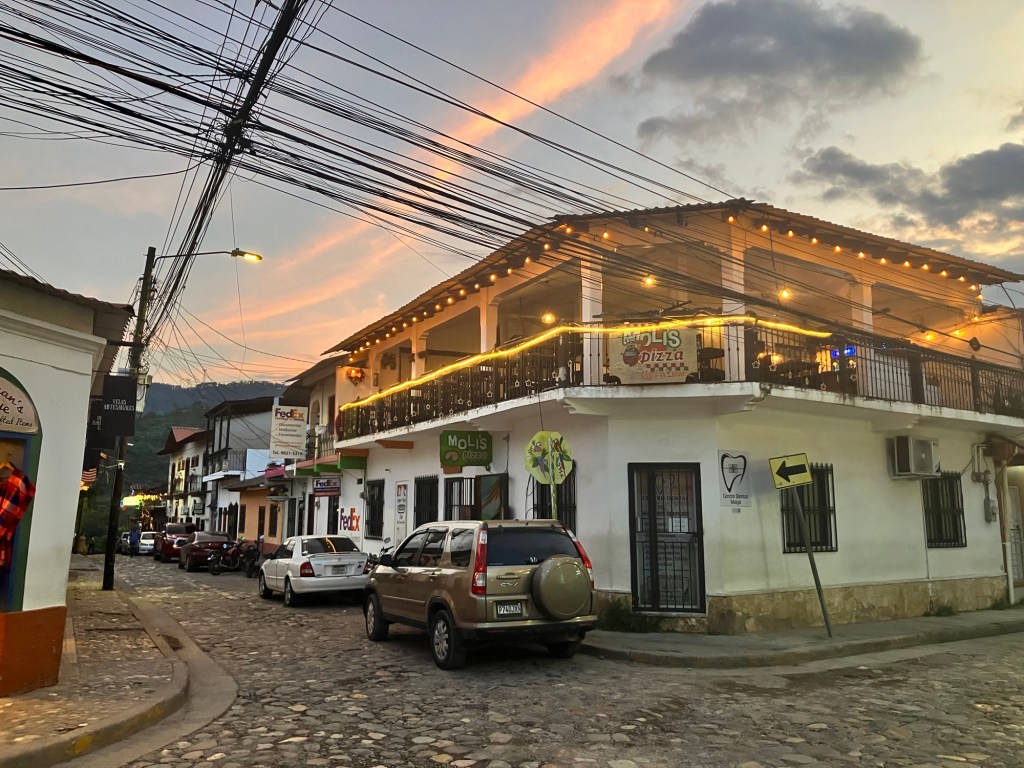
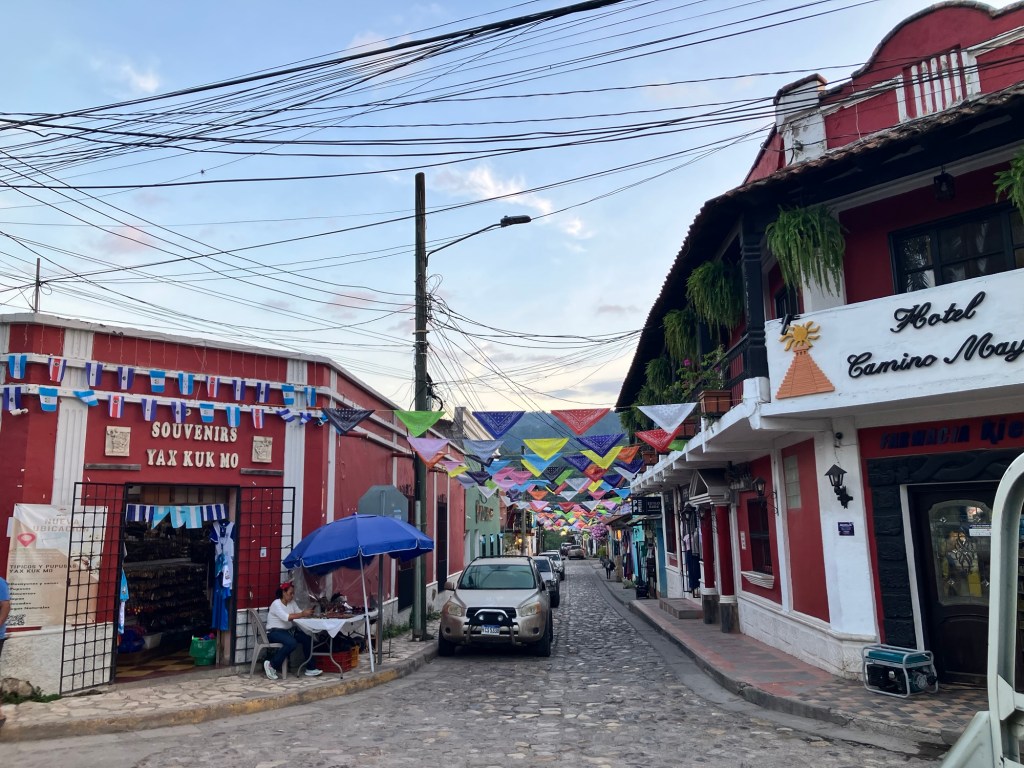
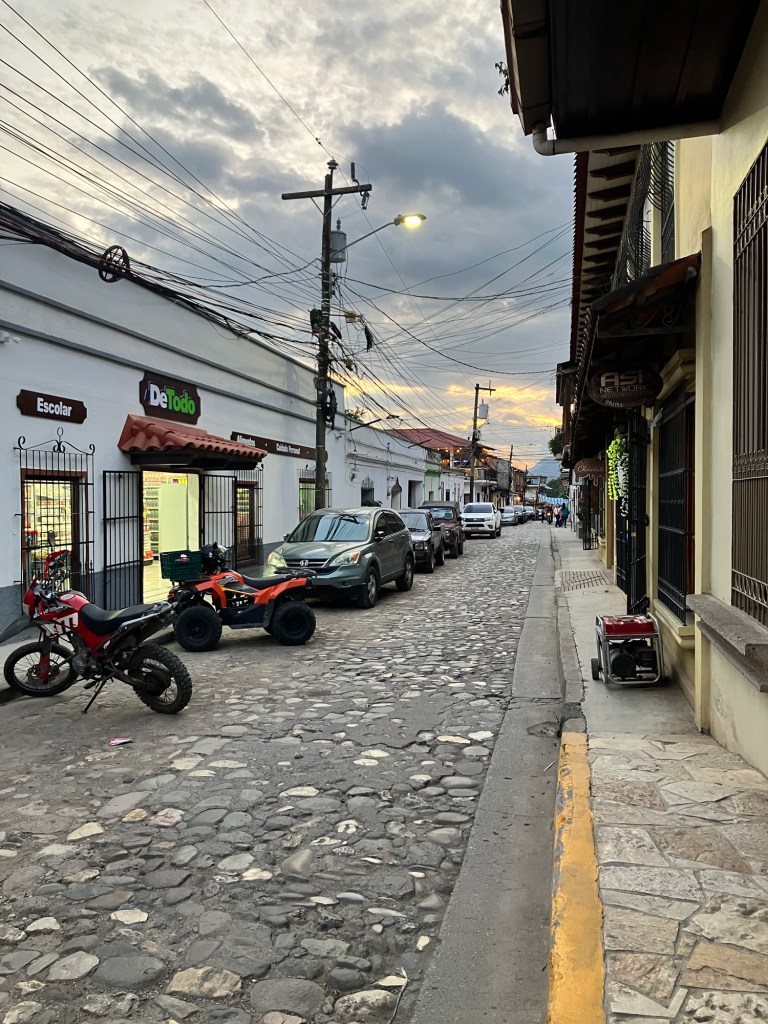
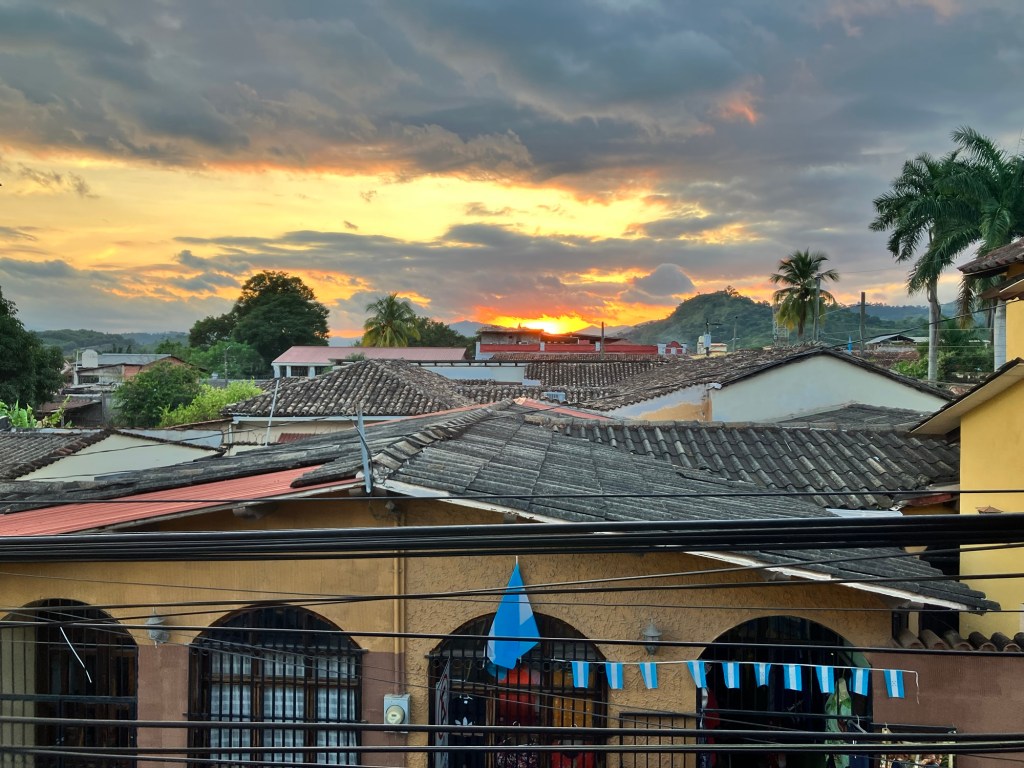
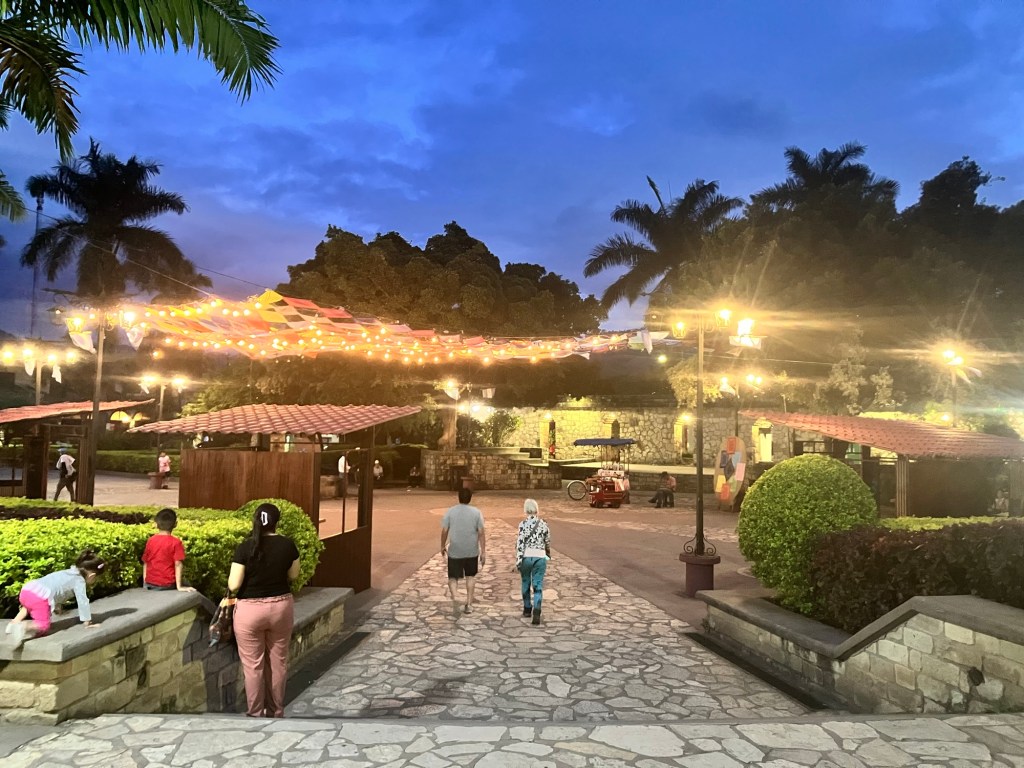
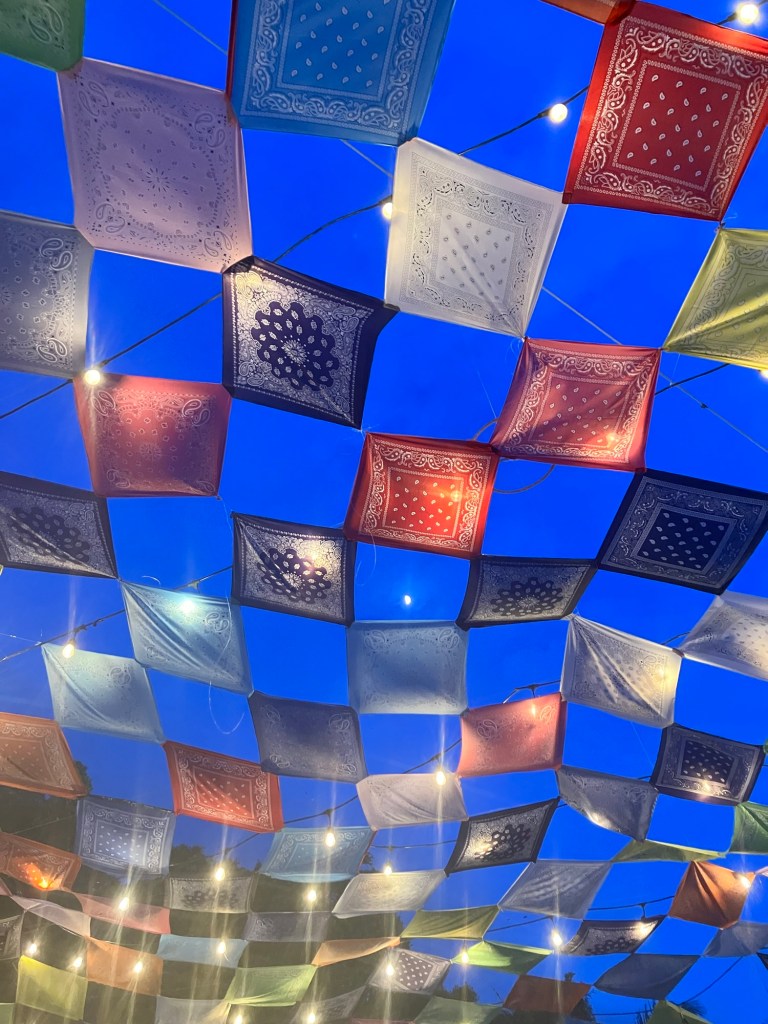
After check in, the CEO takes the group on a simple ten minute walk through the town. “That was it?” someone asks. One main square lit in lights and webbed with flags. The stray dogs put on their soft, hopeful expressions and follow us with polite distance. Their hip bones jut out too sharply. It seems though that there are more urgent concerns. The Belgian trio wants to find a place to have some Honduran beer and several others agree. My roommate needs a grocery store, unable to start the next day, and every day after this, without breakfast, so I accompany her to pick up some yogurt and fruit and afterwards we will have found a chocolatier where we sample a variety and buy a few bars. But a couple from British Columbia, who I’ve dubbed from this point on as the stray dog ambassadors, are drawn to the dogs. They dig through their shoulder bags for left over chips and snack bars and spill them out to them at their feet.
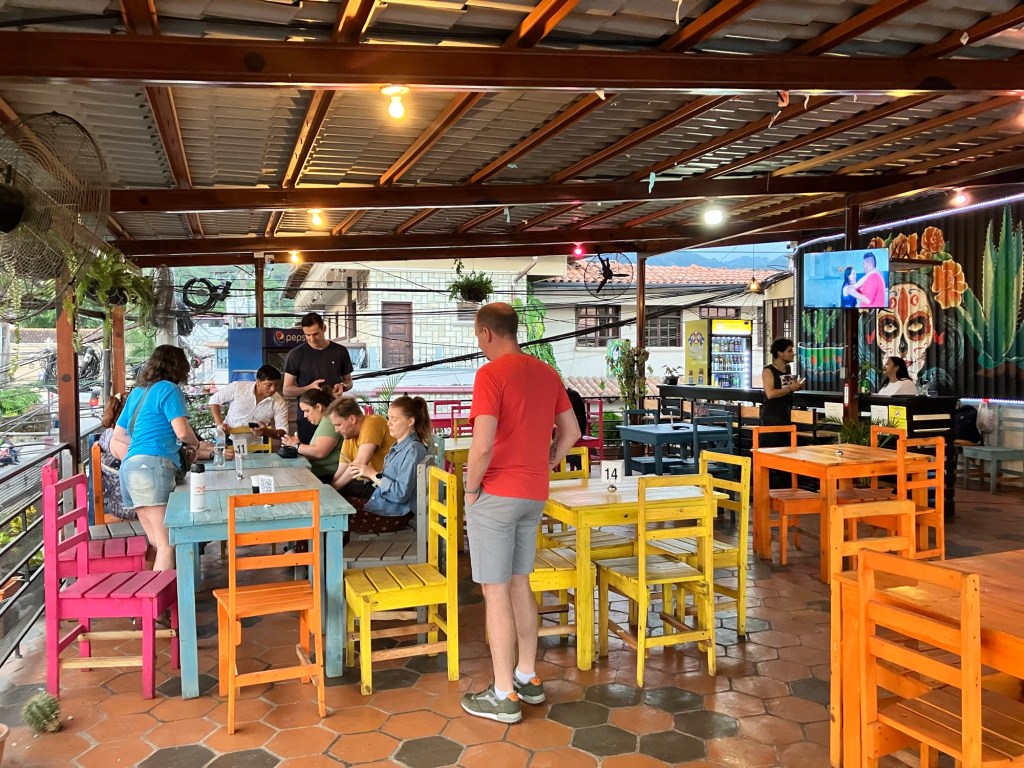
We meet for dinner at 7:30, and this schedule for the rest of the trip can be counted on. There will always be a pre arranged, vetted restaurant dinner. People are such creatures of habit. Take us away from home but give us familiarity. The restaurants are chosen by the tour company to accommodate every traveler’s dietary wishes in terms of variety, choices, restrictions, and comforts. Options for local dishes are offered next to the standard burger or grilled chicken plate. There is a certain accent in the decor and presentation that shields your thoughts from the possibility of picking up a stomach bug that everyone warns you about. But four days later, in El Salvador, a lot of us are struck by it nevertheless. Every other day, sometimes every second day, we’re back in the van for a day of travel, amounting to a third of the itinerary spent in a van. There will always be stops for coffee, bathrooms, supermarkets for snacks and breakfast, and somewhere, a sit down lunch. With a third of the tour spent in the van and the other two thirds in group activities and dinners, there were times I couldn’t decide whether this trip introduced me to foreign countries or to the motley habits and idiosyncrasies of individuals in foreign countries. I have to admit my attention was split between the group of 17 travelers and the five Central American countries, drawn equally to their own stories back home as I was to the stories of these new surroundings.
And so we find ourselves in Copan Ruinas. A local guide greets us in the painted tile courtyard of our hotel, whose architecture and design resemble that of most all of the hotels on the trip; that is, rooms situated along the perimeters of an open air center, planted with tropical trees hanging with fruit or flowers or both. A flock of migratory birds happen to be in town, following the same migratory route as ours since Antigua. At dawn and dusk they screech and scream from the trees in deafening cacophony, or in urgent messaging. In this moment that they begin, the local guide must raise his voice and shorten his pitch. Quickly, then: we have two options for activities the next day: a hot springs swim or a guided tour to the Mayan ruins. I opt for the latter.
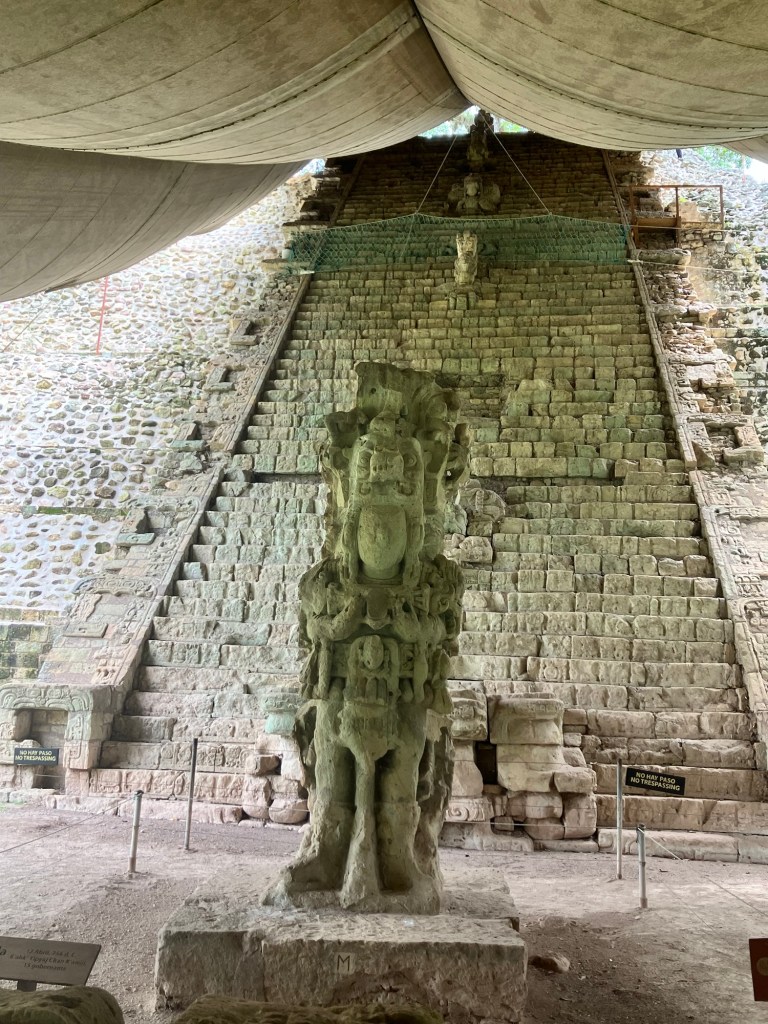
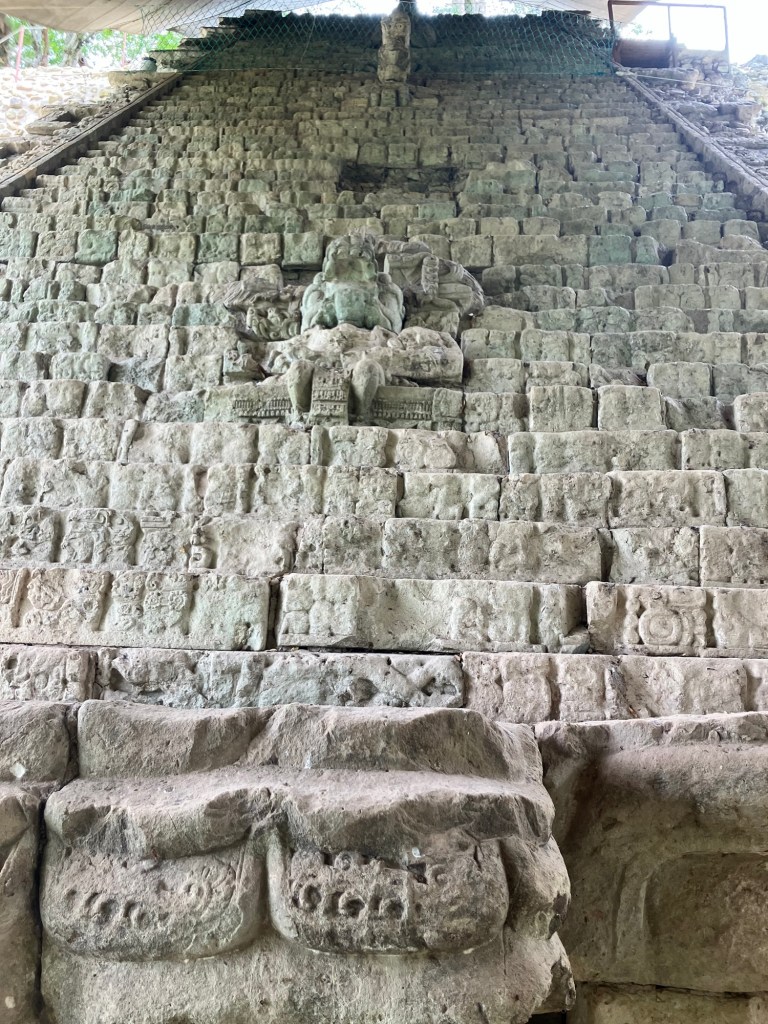
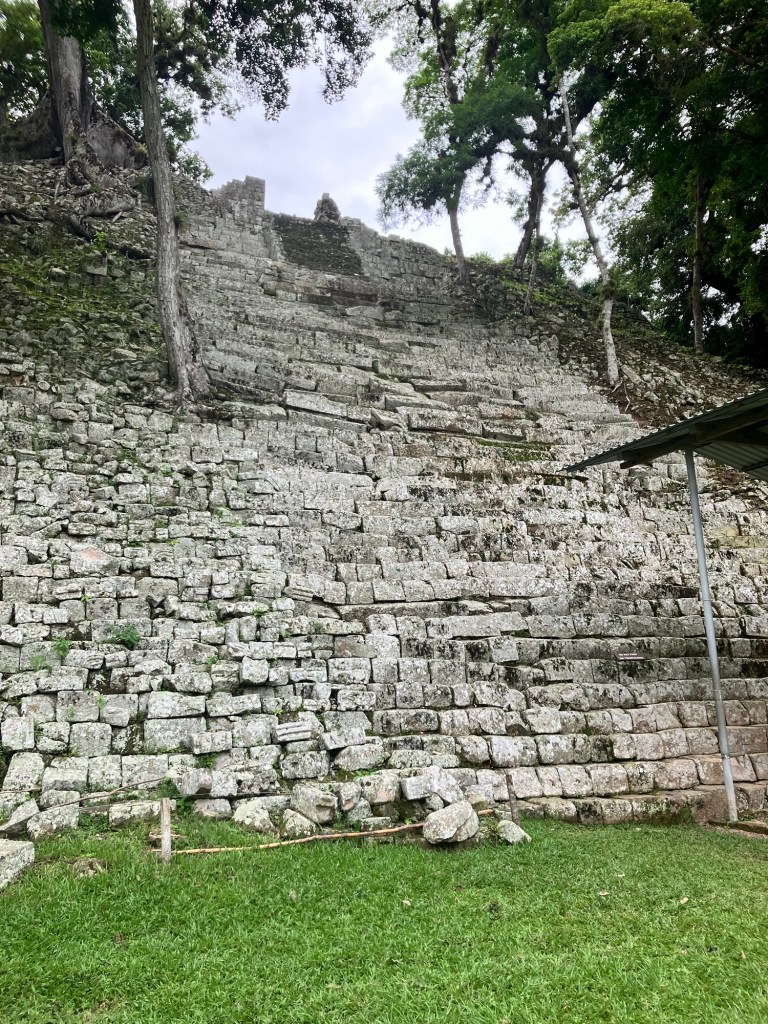
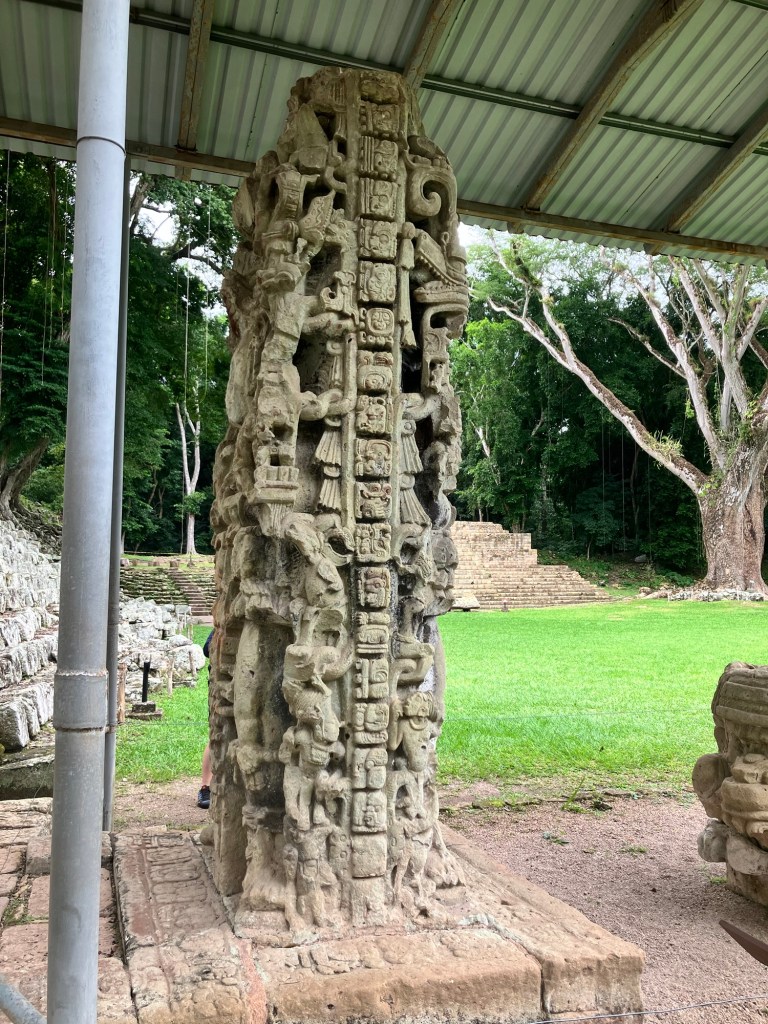
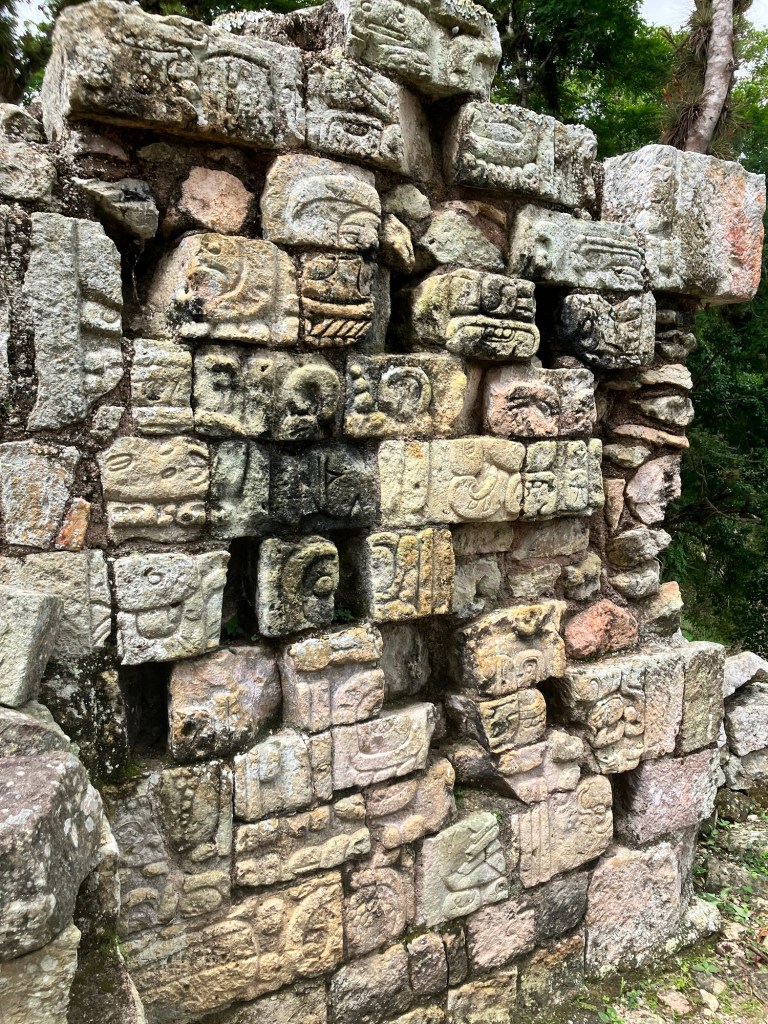
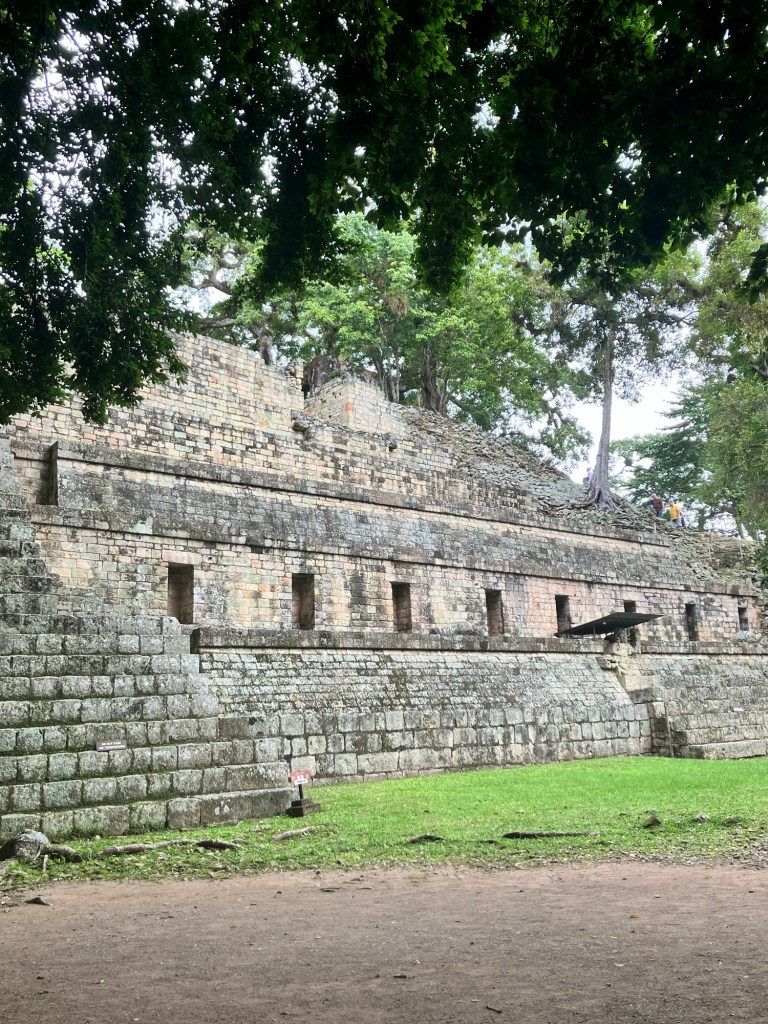
A short trail from the village that leads us to the ruins reveals ruins that have surfaced during relatively recent construction. They indicate the extensive network of prehistoric Copan which stretches beyond this immediate walled area we arrive in. Dedicated as a UNESCO heritage site only since the mid 80s, the forested grounds that surround the ruins also provide a natural habitat for the protected macaw, splashing red and yellow plumage as they fly across the verdant canopy. Pathways laid with recent stones take us up to the Acropolis, where the kings and their families lived. We enter into the western court, a square of grassy lawn between imposing pyramids. For six generations, each king of his time demanded that a new temple be built upon the last one. We are standing in a grassy courtyard of buried temples, six temples deep. Off in a corner of this court, covered by a tarp, is a tunnel that archeologists are using to slowly dig their way through the layers. We move between the prehistoric places and depictions of kings steadily gazing out from their stone stelas. They silently watch the set up of a selfie stick and a camera phone on timer snap several poses of a tourist next to them, as if they were forever buddies. We walk on, over to the eastern court, then to the ball court, and finally to the Plaza de las Estelas, where games, markets, and public announcements and punishments were held. Archeologists had presence of mind to cordon off and install roofs over the hieroglyphic staircase and other more culturally and historically important artifacts well after rain water and freely roaming tourists weathered down the hieroglyphics, some still faintly colored in the palest original indigo, red, and yellow pigments. Present day archeologists are still working to decipher them and the next generation will be tasked with their refurbishment.
We return to our hotel later that evening and walk to dinner at 7:15. I bring back half a chicken burrito that without refrigeration, will will turn in the heat. Without a fridge in the room, I ask the reception if there is a fridge I could place it in, thinking it would make a tasty breakfast. He walks me across the street, unlocks a door to a different hotel, and then unlocks a glass fridge full of soft drinks. He places it in there. The next morning we leave by 6 am, and the thought of eating it then or even taking it with me becomes all at once a bad idea. I instruct the reception the food is “para los perros” – for the dogs – and hopefully he takes it literally and not as an opinion on the quality of the burrito. A head count then, and we are underway to El Salvador.

 Write Down the Road