The kitchen is the hub of most homes and where I spend my working hours. I haven’t been given a formal tour of the equipment or cupboards, so my understanding of its equipment comes from having observed Julia, who by my second day has relinquished control gratefully. She blows me kisses when she arrives every morning, every day of the week from March to October, in through the kitchen back door. It’s from the here that I learn more about life on the island.
Andros reminds me of Mykonos or Santorini used to be like in the 70, that is, before tourism. Cruise ships don’t make the bend around the peninsula to dock here, which has kept Andros pretty much immune from a tourist take over. Two ferries serve Andros every day: one to and from Rafina Port, on the mainland east of Athens, and the other to and from Mykonos, a two hour sail south of Andros. From Mykonos, which has become the tourist hub of the Aegean, you can get to pretty much any other island or mainland port. But on Andros, the towns of the port city Gavros, Chora on the east side, and Batsi on the west have kept their simple life.
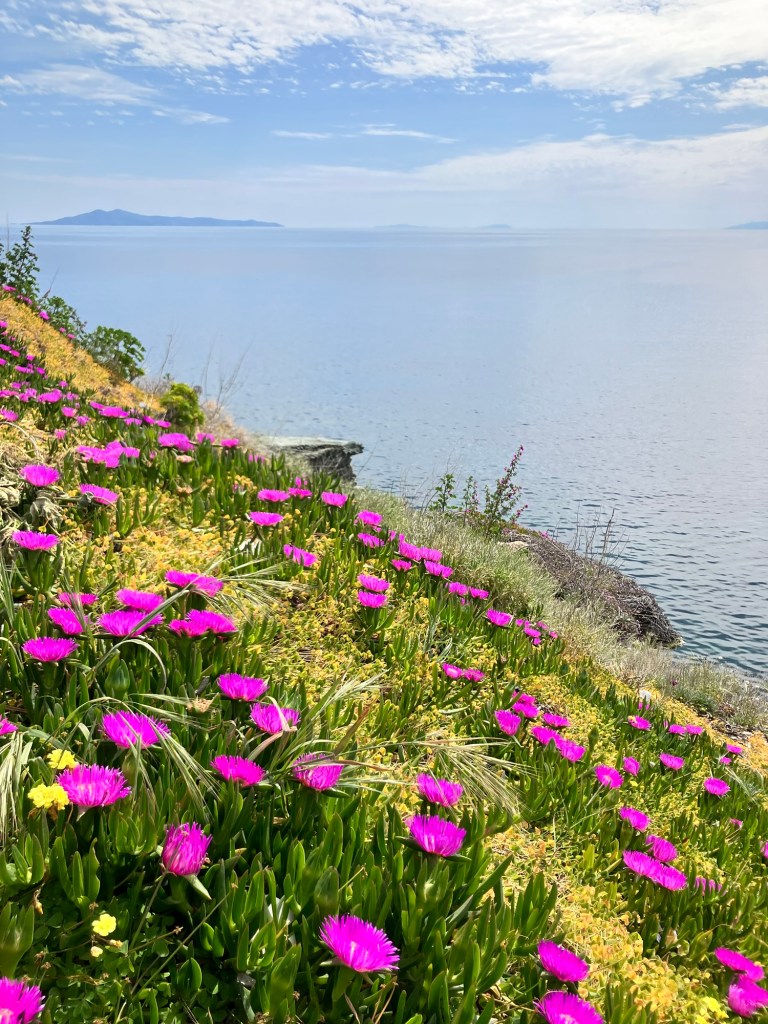
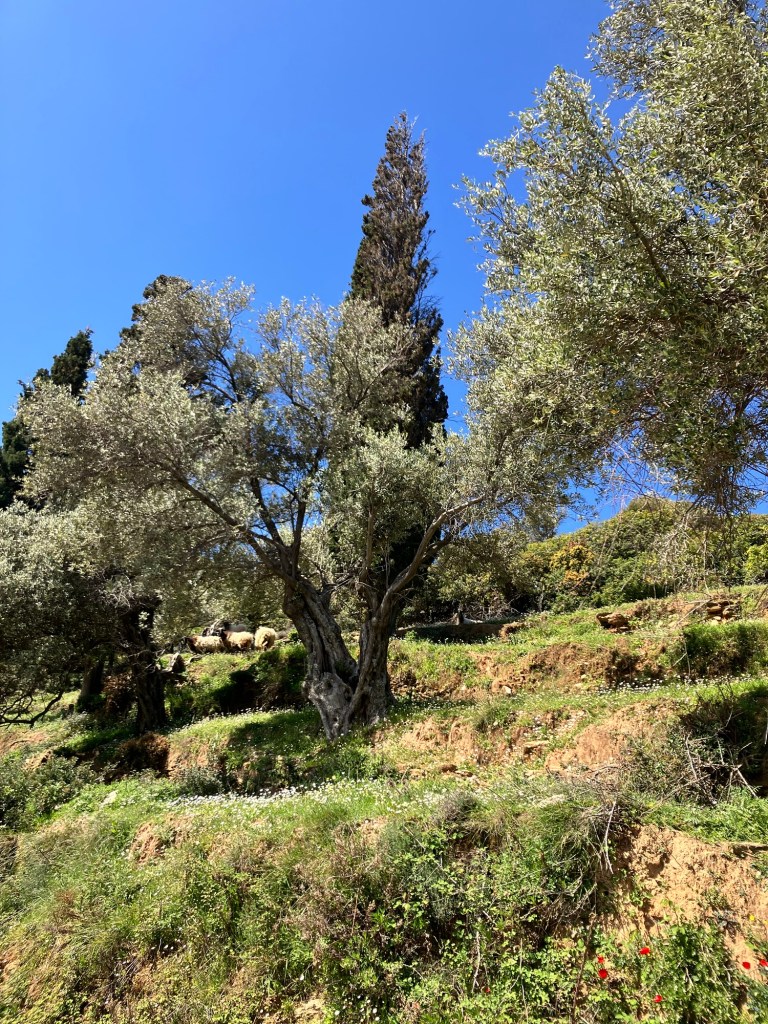
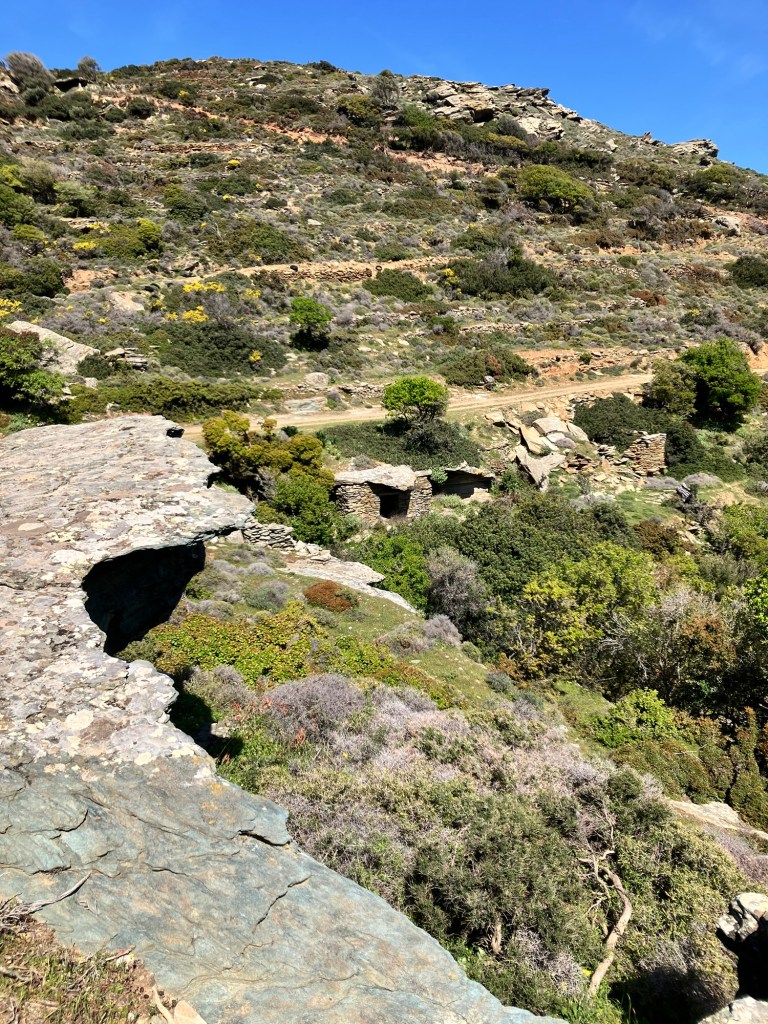
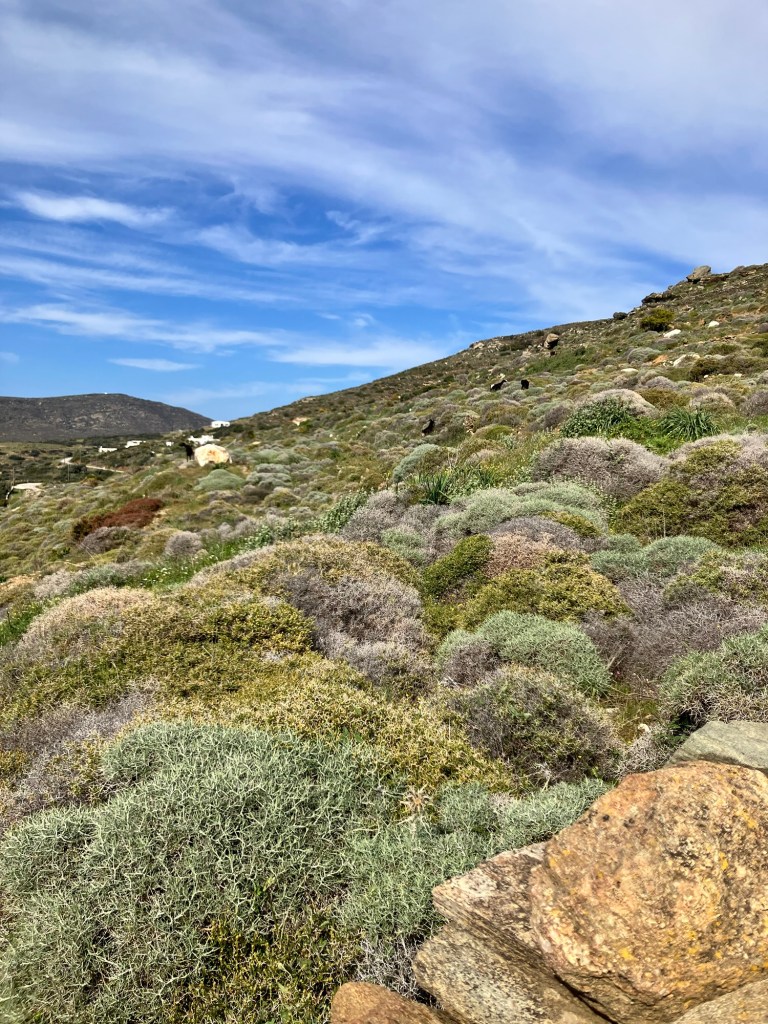
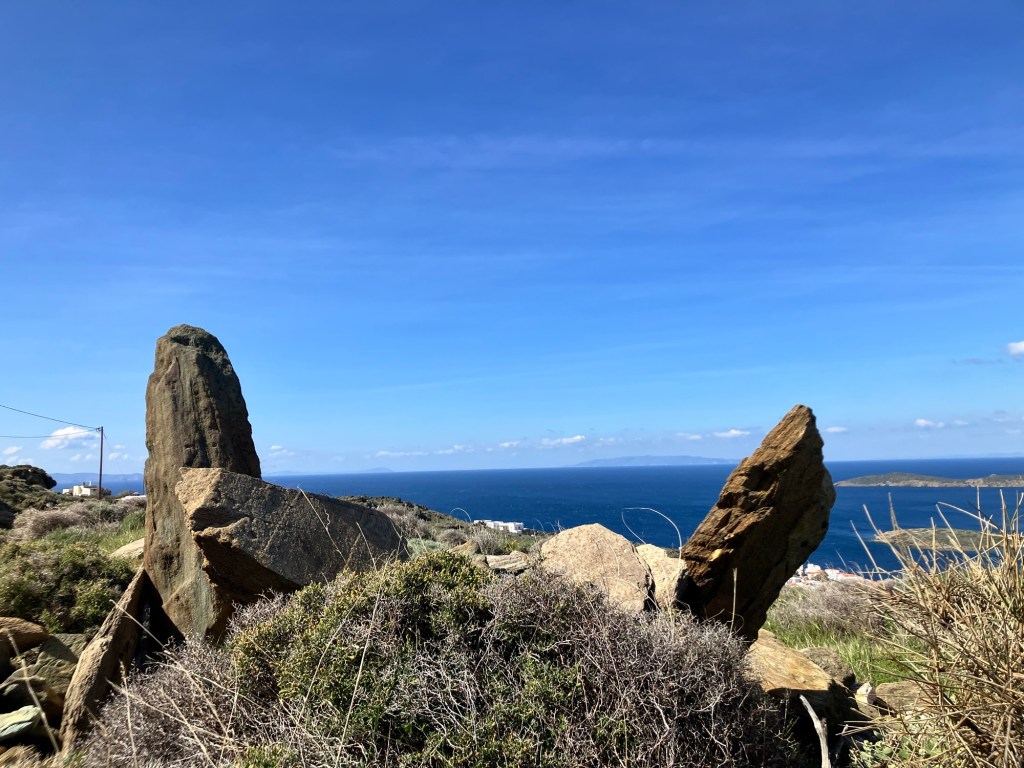
A German couple visits this week from other mainland areas. The husband is a biologist, which brings them to work and live in Greece. His wife enjoys bringing me up to speed on Greek life. Indeed, as I have noticed, the donkey is out of commission here as in many other places in Greece. As soon as the roads were paved, the donkeys lost their livelihoods carrying peasants to the villages and sacks of produce and grain back home. The paving of dirt roads with cement and asphalt called for cars, and they arrived without push back. Donkeys are still used on Hydra, a no-car island, and in some remote hill villages in the Peloponnesus and northern Greece. Widows are no longer dressed in black; whether they are in mourning for the rest of their lives can’t be determined. The καφενείο (basically a very small “men only” coffee hole-in-the-wall place with a few tables, Greek coffee and their hands on “worry beads”) are relegated to very small towns tucked away on remotely accessed islands or on the mainland, off the beaten track. Their wives met on the back steps outside of kitchens where they held their own court, but now both men and women, all ages, meet at coffee bars, which serve all sorts of coffee types (from espresso to macchiato) and drinks. These iconic images of Greece, as are the small hillside chapels and monasteries, the windmills, grape vine canopies over outdoor tavernas, blue accented doors and window frames; white washed stairs and structures, the lounging cats near back doors – this simple still life presented in glossy tourism pamphlets is hard pressed to be found, but still can be in the midst of this irrevocable changing life. The sea, though, still reflects a time long gone, and if you bend towards the clear, turquoise water you just may see a younger version of yourself. And above the bustle of villages, the terraced olive trees and cypress sentinels still offer shade and wind barriers for the sheep and goats high in the hills. The land is still parceled by centuries old, slate stone walls, each partition once belonging to a family or shepherd to contain and graze their own flock, but now the few remaining herds are free to roam everywhere. They belong to families who now receive subsidies to keep them, ostensibly for milk and cheese, but more for a country life aesthetic. They may be funded for keeping a representation of the past Greek life intact, if not for the tourists, then for maintaining the Greek identity. In any event, the sheep and goats are skittish, shaggy, and have become wild and free. They scatter and run from hikers like me.
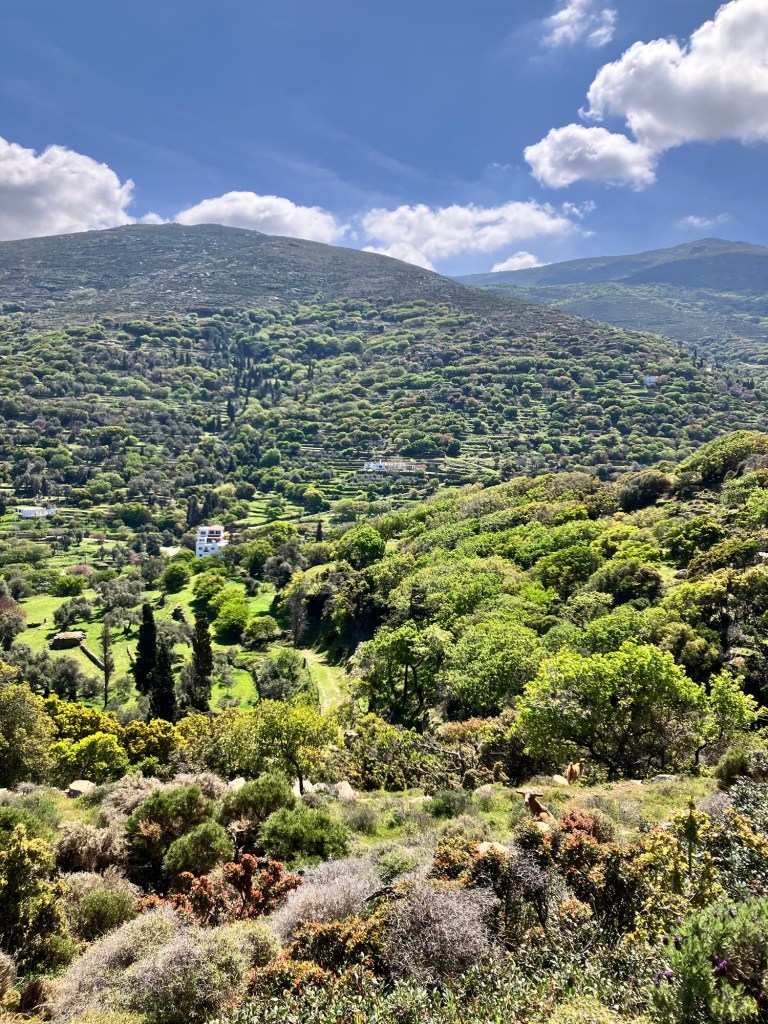
The weather is turning warm. The sun is staying for the season. The town is coming alive. From one day to the next, tavernas open for business, table cloths flutter, Greek music perforates the howl of the meltemi, the northern winds that sweep through the region. I find a bakery by its familiar aromas of cinnamon and nutmeg and the pharmacy – there is actually one – by its neon lit green cross. Hems of dresses hanging from hooks lift and billow outside a “resort wear” store opening any hour now next to the gold and silver jewelry store. An open air bar gets a sweep down. And my regular “super” market is busy with Greeks who come to Andros for their Easter holiday, with Germans, Dutch, – few Swedes even – who stock up their kitchenettes and en-suite rooms with carbs and coffee.
I have come to know the five aisles in the grocery very well. I wonder now if I’ve ever needed more. With one vegetarian and one vegan to keep in mind, it’s been a new challenge, but a fun one, and quite easy to master. Prices are “island import” high for most things, but we get bucket loads of feta cheese, tahini, honey, and lemons locally that keep me quite happy. I look up recipes for using the produce I find and I recall and use recipes I made in the past. And of course, there’s always the olive oil and sometimes that seems to be all that’s needed for the finishing touch and taste.
The kitchen here by contrast could use some of that five aisle organization. There’s a motley arrangement of tools and cookware that makes perfect sense to the owner. He seems perfectly happy knowing that he can find what he’s looking for (and why wouldn’t it be obvious that the single serve milk pods that you need to set out for the breakfast buffet are behind the cleaning rags on the top shelf of the sundries shelf in the pantry?) and reorganizing it for a short stay is on no one’s mind. Empty plastic yogurt tubs that might work for leftovers except for absent lids tumble around with a few strainers and a cacophony of miscellaneous containers below the large double stainless steel sink, the best part of the kitchen. One family size iron skillet, a small frying pan, one medium pot, one large pot and a tall Turkish pressure cooker concludes the cookware category and suffices for purposes.
These purposes just came down from five of us to three. Switzerland met a girl at the beach on his last day who changed his mind to stay another day. Then another. On the third day, they took the ferry to Mykonos and haven’t been heard of since. Montpellier was going to stay till after Easter until he learned there would be no working over Easter but double the amount before the holiday to get the rooms ready for the guests. He came down with his backpack into the kitchen the next morning and to the owner said, “I’ve decided to leave. It’s not a good fit for me.”
It is Good Friday. The church has been ringing a single bell every minute all day and now into the night. Firecrackers are lit and pop over the harbor. A radio sings Greek melodies from someone’s yard. Children are out of school and are high on candy down by the water. And the waves still roll and crash over it all.

 Write Down the Road