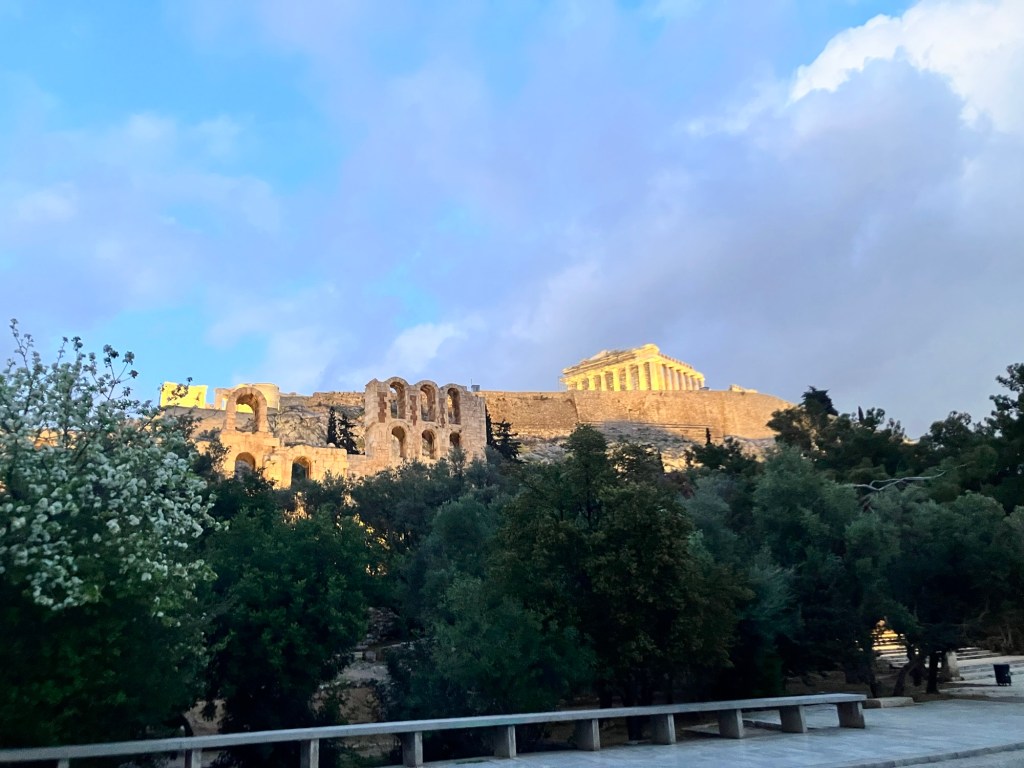
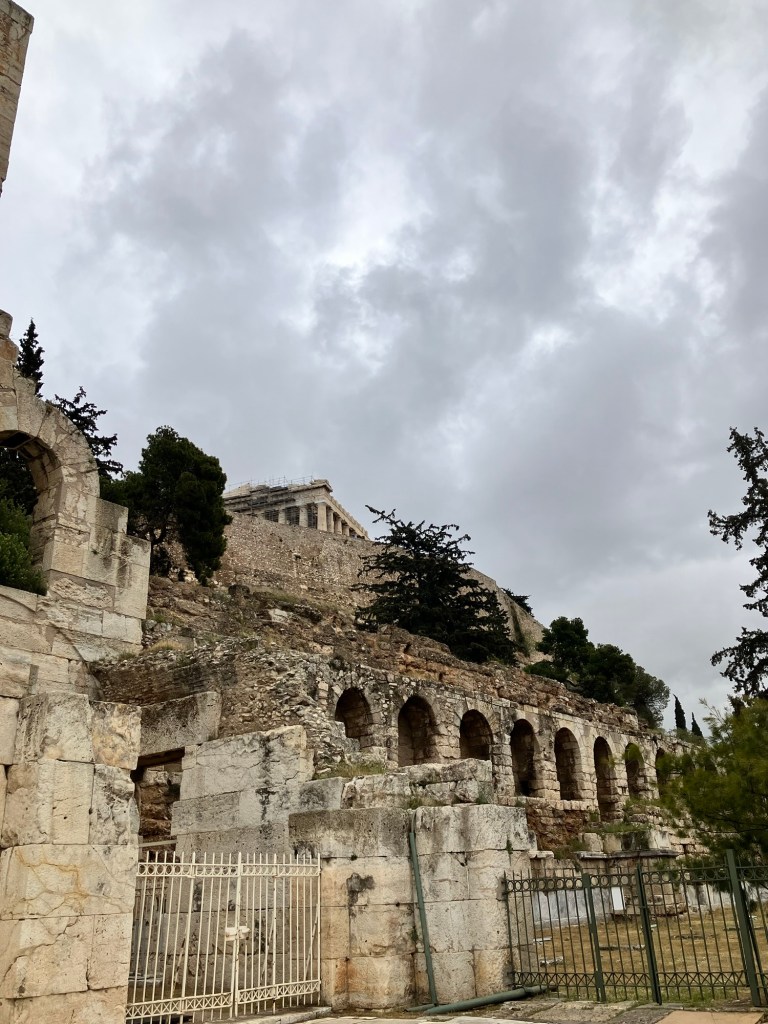
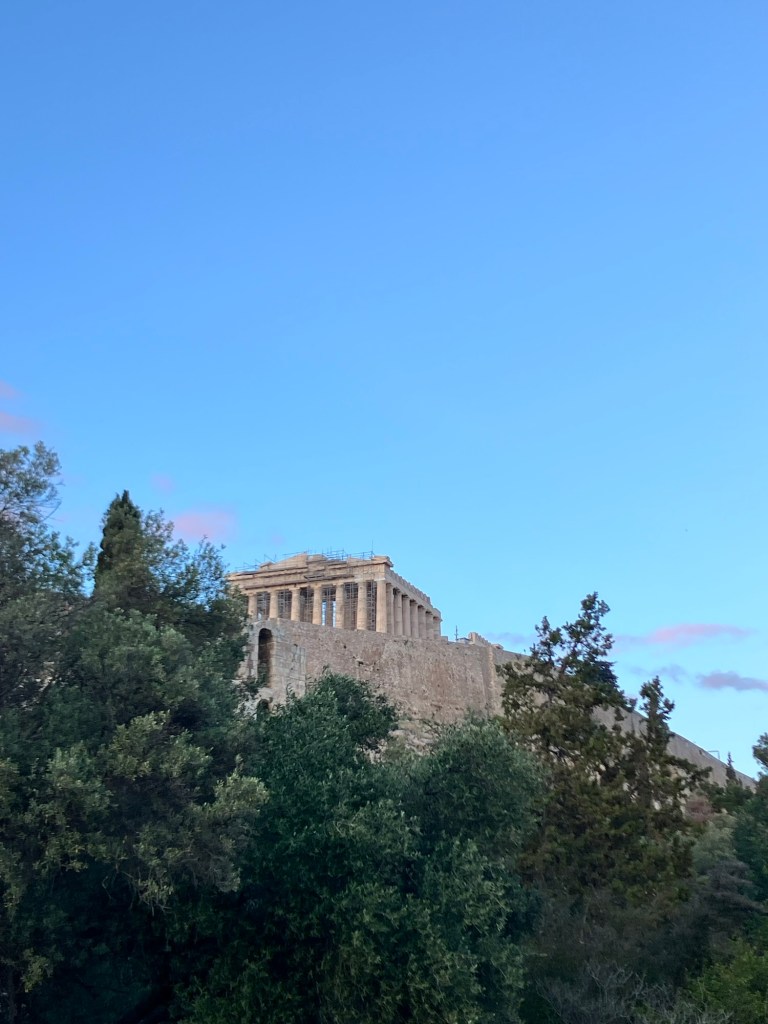
I understand nothing, but understand everything. Conversations I overhear are unintelligible to me yet the sounds of the language roll out together in perfect familiar poetry. Traffic volume condenses and tightens the narrow one way streets I once walked beside that in my memory seemed to offer more space and sky. Hurried currents of movement rush along the main arteries coming in and around the National Garden like in any major city now, but one look up and around and I can see the Parthenon and Lycabettus Hill landmarks that remain marked into my mind.
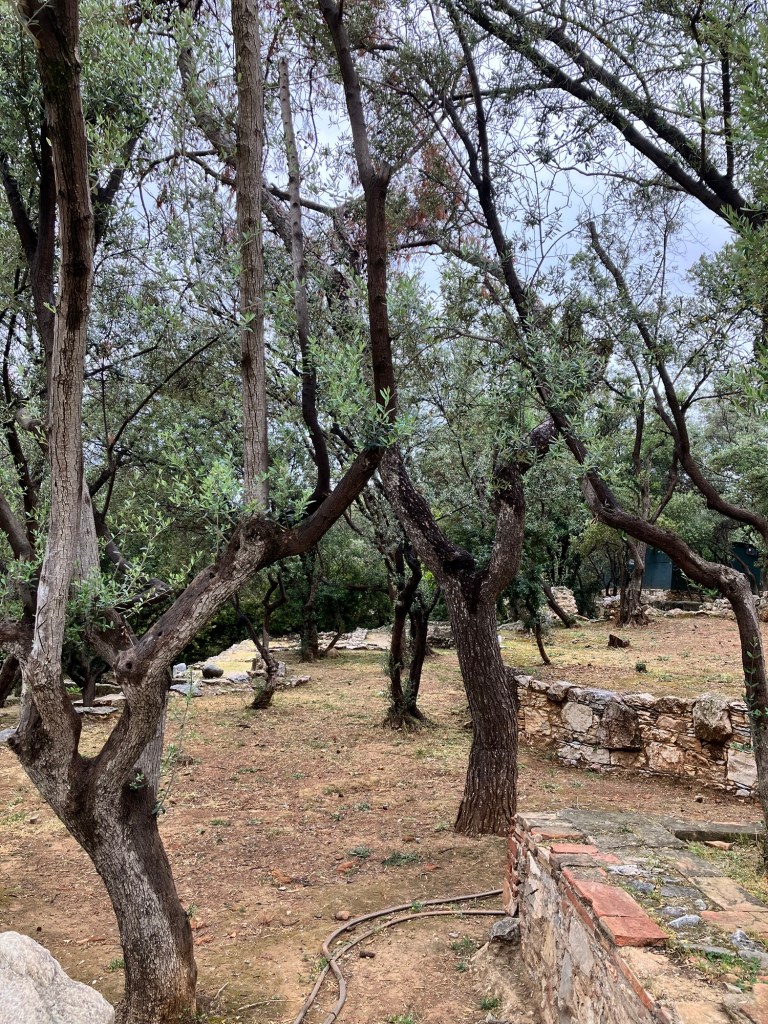
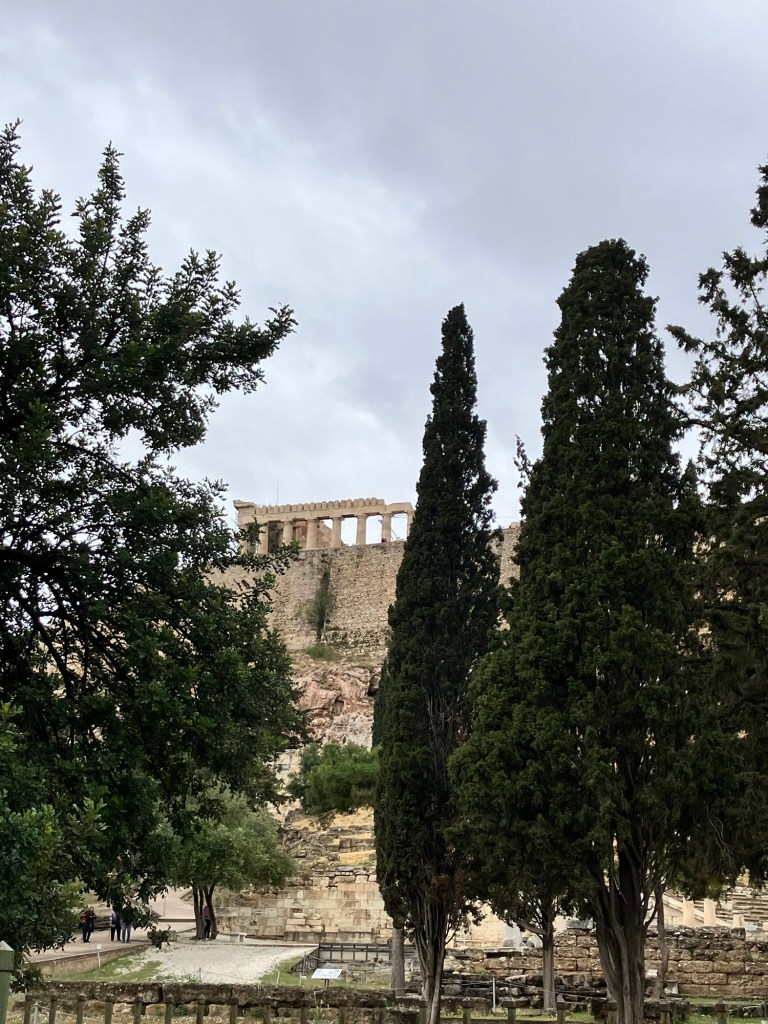
I leave the hostel after breakfast and walk towards the Acropolis with a street map in my hands. With such an imposing structure lifting into the sky like a sun, it’s hard to be lost in this city. Soon you will recognize which sides face which direction, and using Lycabettus Hill as a moon, you can chart your way around without an app. I look up and smile every now and then, remembering a time when the Parthenon was open to the public to freely wander through, and that somewhere up there my footprints have touched and shifted the stones just a bit. I walk among the olive trees beneath the imposing structure that commands something kin to admiration and faith knowing this is enough, this proximity has brought me as close as I could be to where my family and I scuttled around so many years ago.
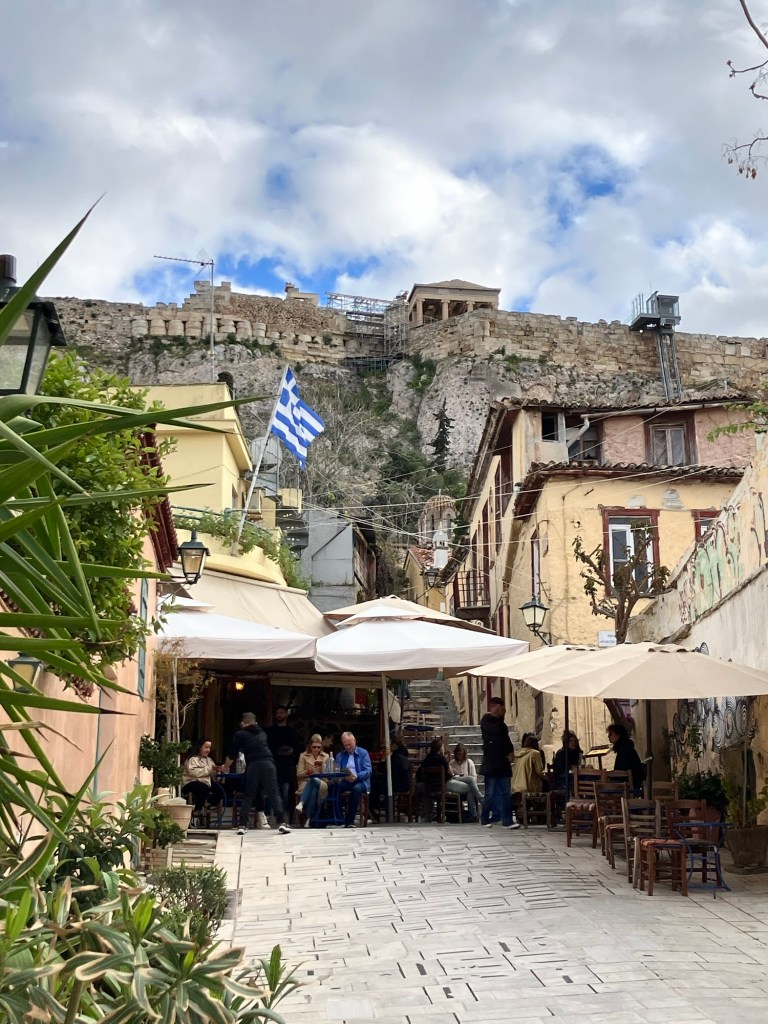
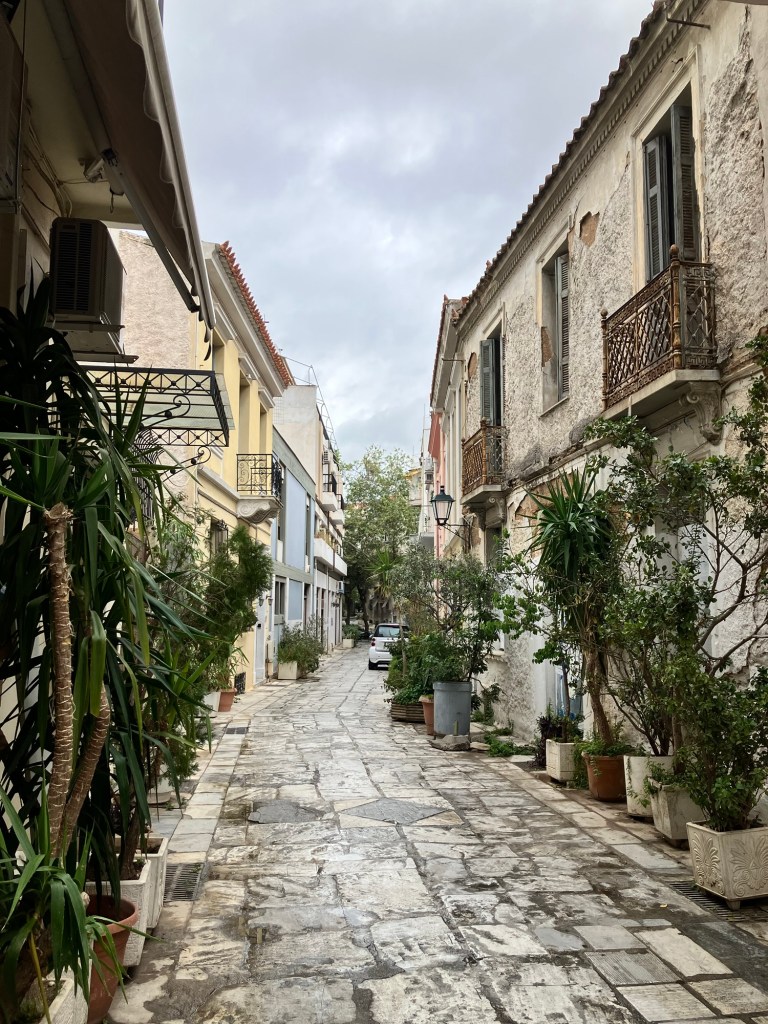
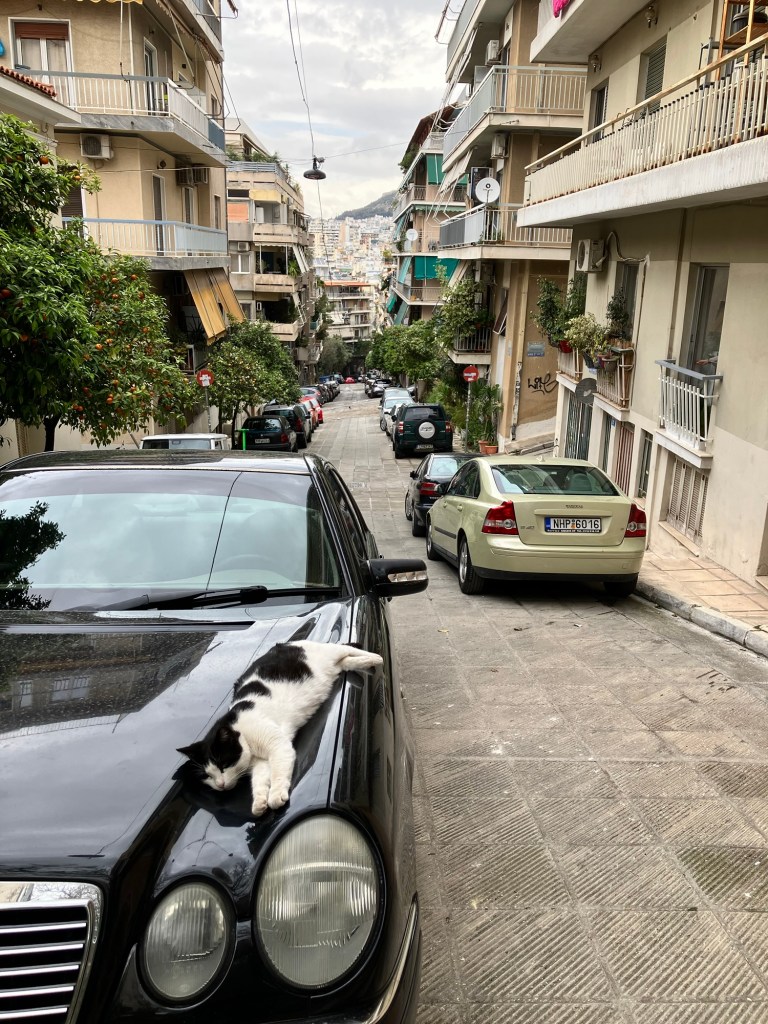
I descend into the Plaka, a quarter that nests just east and down the slope of the Acropolis. Small wooden tables decorated for lunch wait in white, spilling out onto these narrow pedestrian ways. Cats loiter and sleep and slink between the teetering, old apartments above the restaurants, and the waiters wait outside and say “please, sit.” I have my eye on a place, Xenious Zeus, that offers a view onto some of Athens and my home hill, and I will try to find it on my return. For now, I need to head to that hill and find my old home.
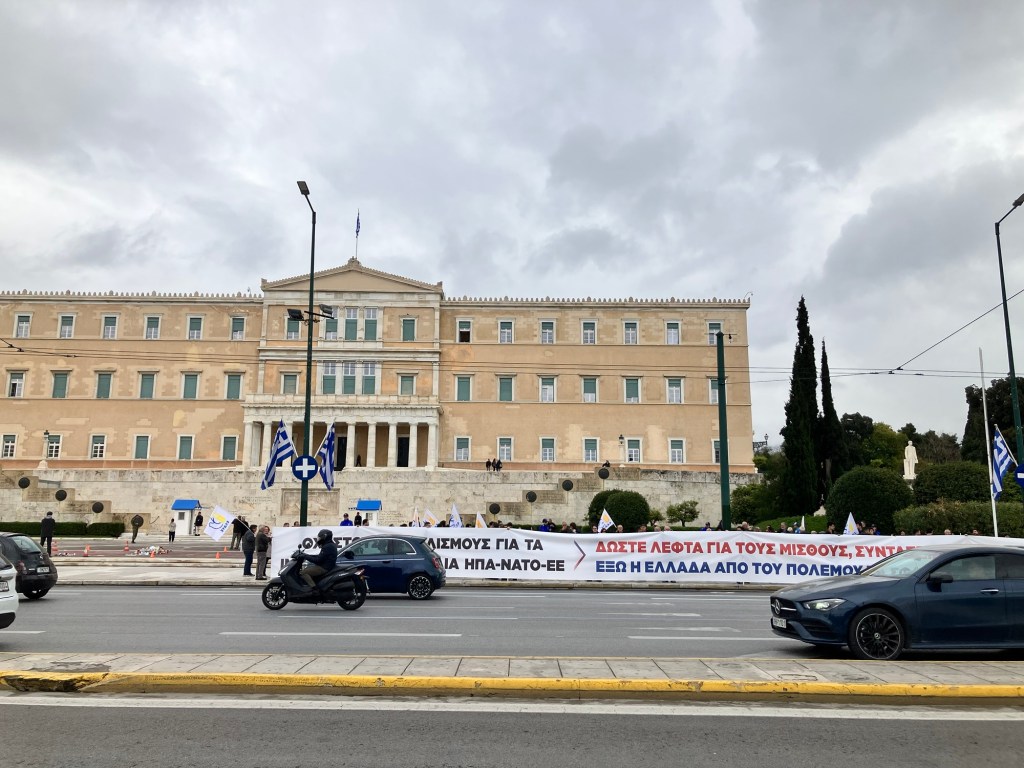
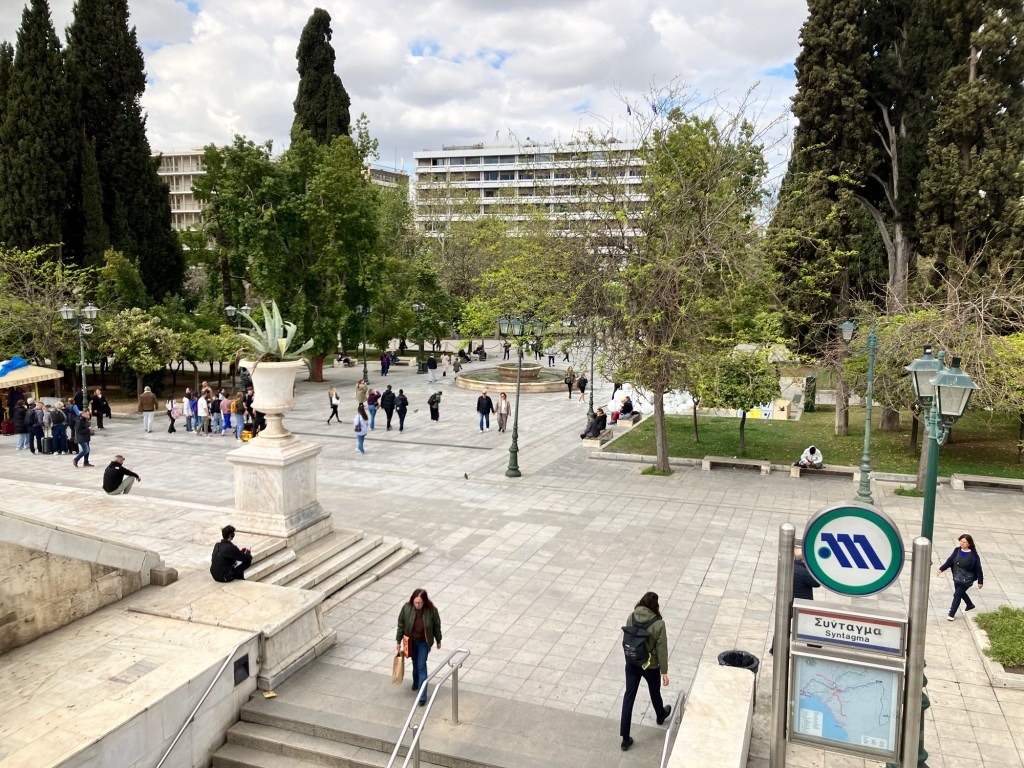
From the Plaka walking east, I arrive into Sintagma Square. It is full of activity today. At the Parliamentary building, protestors hold banners that spread the length of the marble square; police huddle nearby. I can only make out the word NATO. On the other side of the street, Syntagma square is full of demonstrators today and their organizer shouts into a megaphone; but the park is still green and the pigeons still flock, and all around this marble, life moves through.
The present and past are in friction here, it seems, rubbing up against each other like the stray cats along the streets, well fed, docile, free, bunting against a parked automobile tire. Refurbishing and construction is everywhere, yet dilapidation and graffiti are neighbors. Each contend for a voice in this economically tired metropolis. These neglected and painted buildings are dwarfed under the metal orange cranes lifting concrete and drilling old away, as if they refuse to relinquish a stake in their history to the future. The rebelliously painted facades seem to cry for recognition from the government, for self governance and independence. “The Greeks carry sorrow, but not guilt,” a jeweler told me during a sit down over his precious stones and hand made Byzantine designed 24 karat gold rings. “They keep nothing in. When the French read a book, they keep it to themselves. But the Greeks want to share it.” So there is life is here that demands to be lived, and this old democratic meeting place bustles with an energy that refuses to let go. Everyone is out, everyone talks. The jeweler wants to talk about world events and today’s news over a hopeful sale. A waiter wants to know where you are from and offers you desert to stay longer. The vendor selling carved olive wood trinkets wants to help you learn Greek and to ask him anything you want to know. The symbols of the past, the columns of the Parthenon, Hadrian’s Wall, the Agora are scaffolded and fortified; similarly, the Greeks refuse to crumble and fall despite a different kind of climate. I feel their verve and hunger for life; the future is tempered with memories of their past, and their past is all around them. They distrust their government, but are well informed of it and versed on others around the world, and I found this to be true whether it came from a taxi driver or a jeweler. I have not yet seen the Greeks with any worry beads in their hands, but maybe there is nothing left to worry about when you have relatively little left except an impossibly infectious quality of living now and living large.
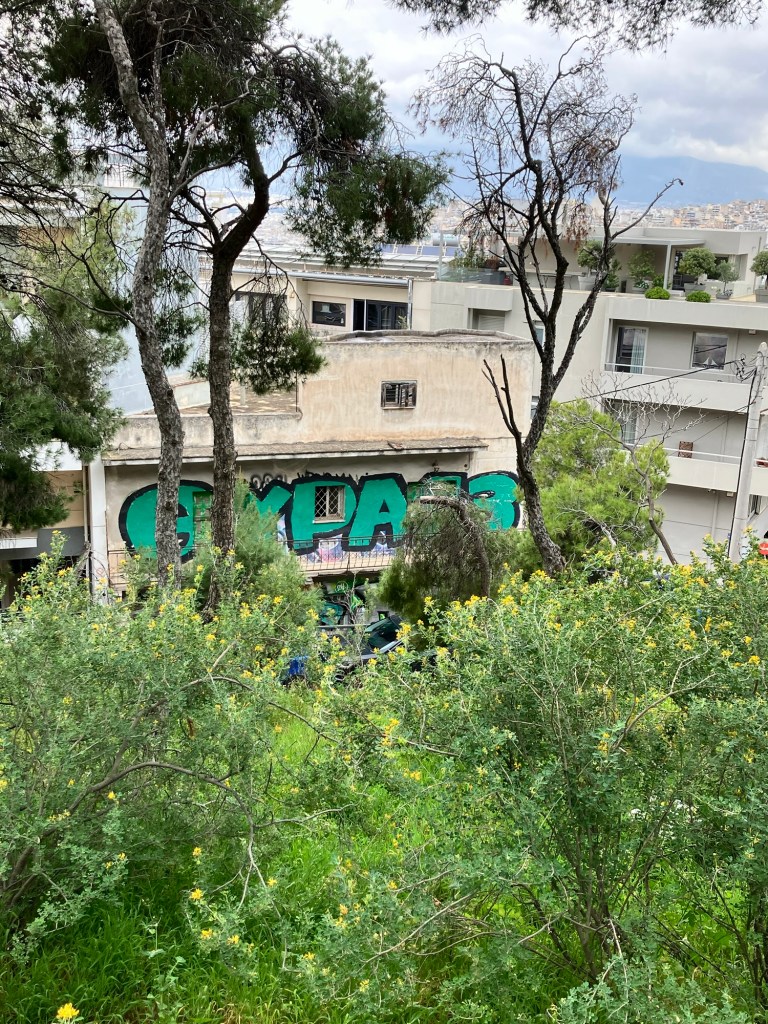
I find the perimeter street of Lycabettus and walk it clockwise, heading north along its outside. I must remember this, but I don’t know if I do. I do know what I’m looking for, though: an unmistakable faded sea green triangular building of three stories with a wrap around balcony affording views onto the city and up into the cypress and olive trees on the hill, just across the street. It fits into the triangular block created by the perimeter street and one that cuts diagonally down to where we bought our bread and warm lunches from the small kitchens. Eventually, I should be coming upon it, but my views of the city are cut out by taller apartment buildings than I remember, but I know I’m getting closer. It’s something you know. And then I recognize it immediately. Coming in from the side, the wrought iron balustrade gives it away, and the cement ledges of the balcony confirm it. But then I see what has happened. The whole thing is abandoned, left to rot. Graffiti in loud green blasts its opinion over its entire hill facing facade. The red shutters (were they red? Green? I can’t remember) are closed and falling apart, cement chunks have fallen from the cement eaves and underbelly of the balcony and a chain is wrapped around the oxidized wrought iron front door, padlocked to its frame. Our house has been neglected, discarded, run to the ground. It will likely face demolition. Its time is limited.
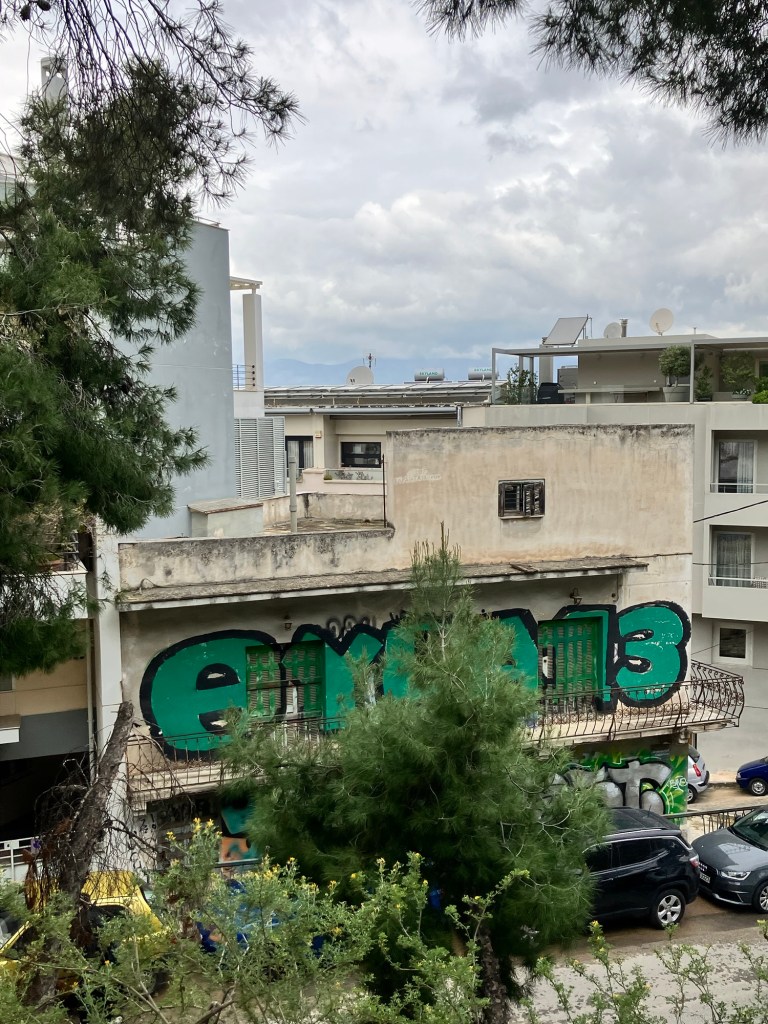
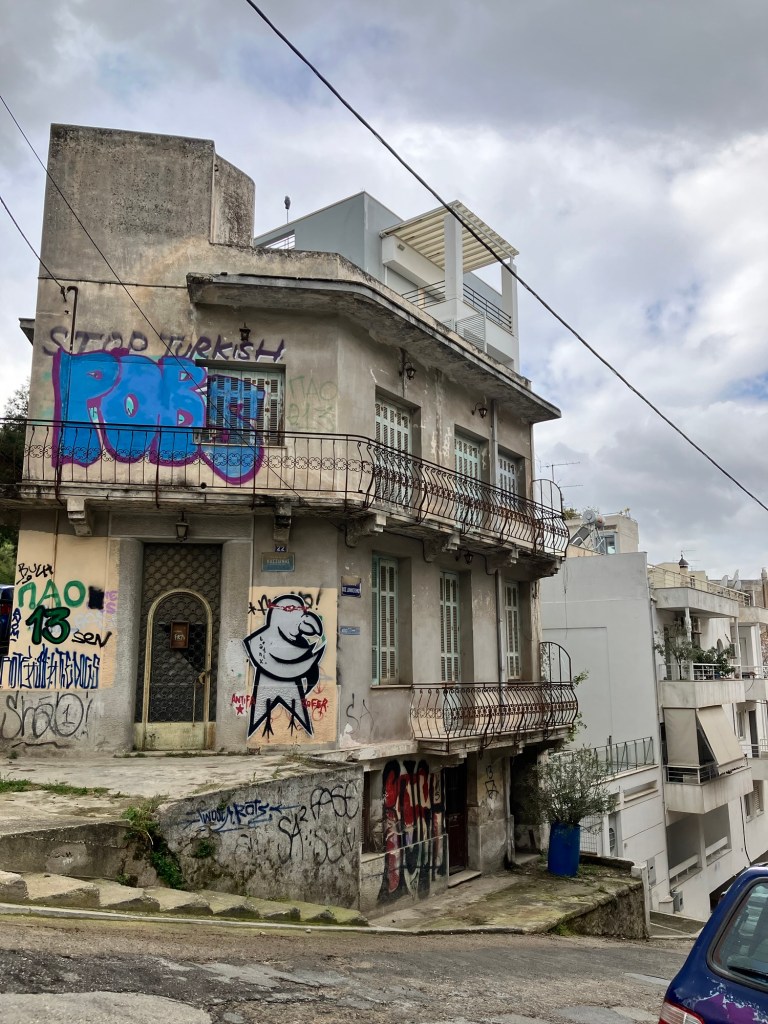
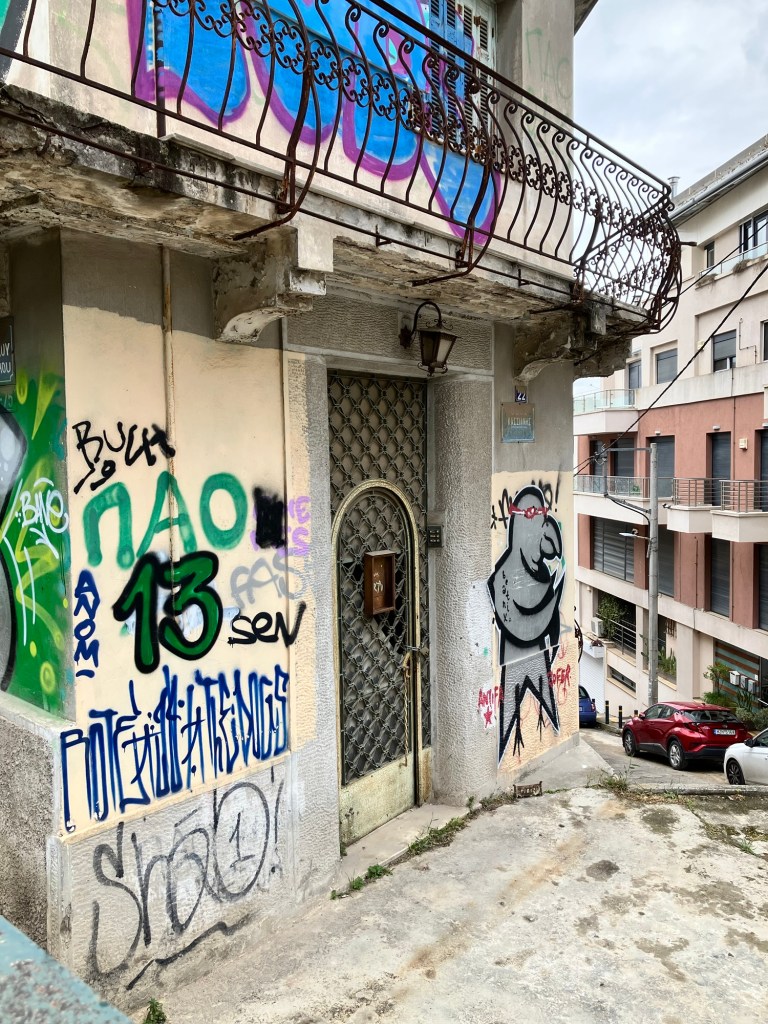
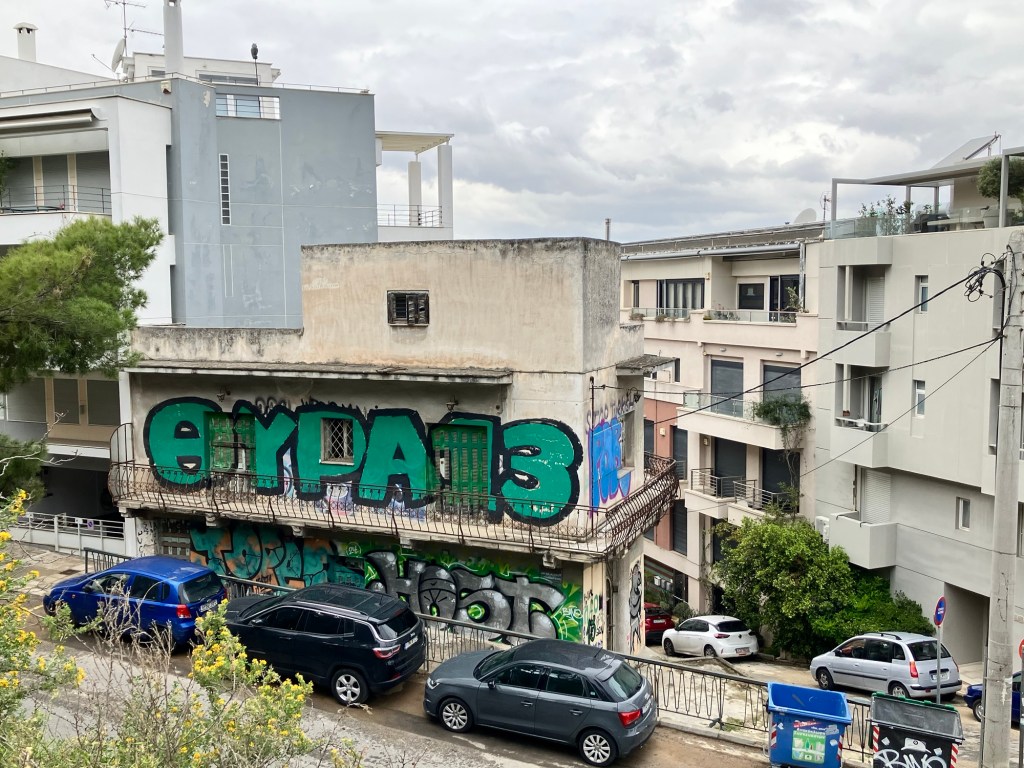
I stay a while like a bereaved in mourning, standing vigil. It’s hard to see a house that gave us a home fall into such disrepair and dilapidation. We learned Greek behind those closed shutters, took cold baths to prevent heat stroke one evening behind those ones, next to the others; my mother simmered octopus in tomato sauce beyond in the kitchen and I wrote an essay about a ferry ride to Santorini behind the shutters there, facing the city, on the other side of the house. I read TIME magazine and learned fractions, and this is where we lived and where we became who we became. I left to walk up the hill, eventually, and settle my thoughts into a place where the movement of change and the rooting of memory converge and how these are a type of friction as well.

 Write Down the Road
Our abandoned old place somehow makes me really sad. I wonder if it’s for sale!
LikeLike
It did make me very sad. It was the only one on the whole side of the hill like it, which made it even worse. I mean if the whole neighborhood goes, that happens. But all the others were kept up and pretty. I think it’s to sell to demolish, maybe. There was no sign.
LikeLike